Co-design is one of the most thrown about terms in public sector communications, and one of the most misunderstood.
It appears in briefs, tender responses and project plans, yet in practice it’s often shrunk to a single workshop and a sign-off.
In our recent webinar on co-design through a First Nations lens, Punchy founder Anthony Lam was joined by Vikki McIntyre, First Nations Engagement Manager, and Casey Harrigan, Production Manager, from The Social Deck, a for-purpose agency specialising in social research, communications, community engagement and behaviour change.
This article draws together the key lessons from that conversation.
Why co-design matters now
Improving the lives of First Nations people needs to be an active priority, and recent data shows how far there is to go:
- Only 1 of the 19 Closing the Gap targets was met in the last reporting period
- First Nations people carry more than twice the disease burden of non-Indigenous Australians
- 54% of First Nations people report experiencing racial discrimination
- 87% of Australians believe First Nations people should have a say.
That last figure sits alongside the result of the 2023 Voice referendum. One of the most direct ways for communities to have a say is to be part of designing the programs, policies and resources that affect them. That means creating with communities, not for them.
This is not unique to First Nations audiences. Genuine co-design matters for many priority cohorts, including multicultural communities and people with disability.
Better outcomes depend on trust, respect and meaningful participation, and co-design is one way to put those principles into practice.
What is it to be genuine?
Co-design can easily become a “tick and flick” exercise, where consultation happens, feedback is collected and very little changes.
Genuine co-design means being prepared to change the work based on what you hear, and going back to test whether you got it right.
This matters especially with First Nations communities, where consultation fatigue is real. Many communities have given their time and knowledge repeatedly, only to hear nothing back and see nothing change.
Getting it wrong again risks losing the trust of the very people you are trying to reach.
A framework for culturally safe engagement
The culturally safe framework was developed from the Social Deck’s own experience and is aligned with the AIATSIS Code of Ethics. It works as a practical tool to make sure people are treated with dignity and respect.
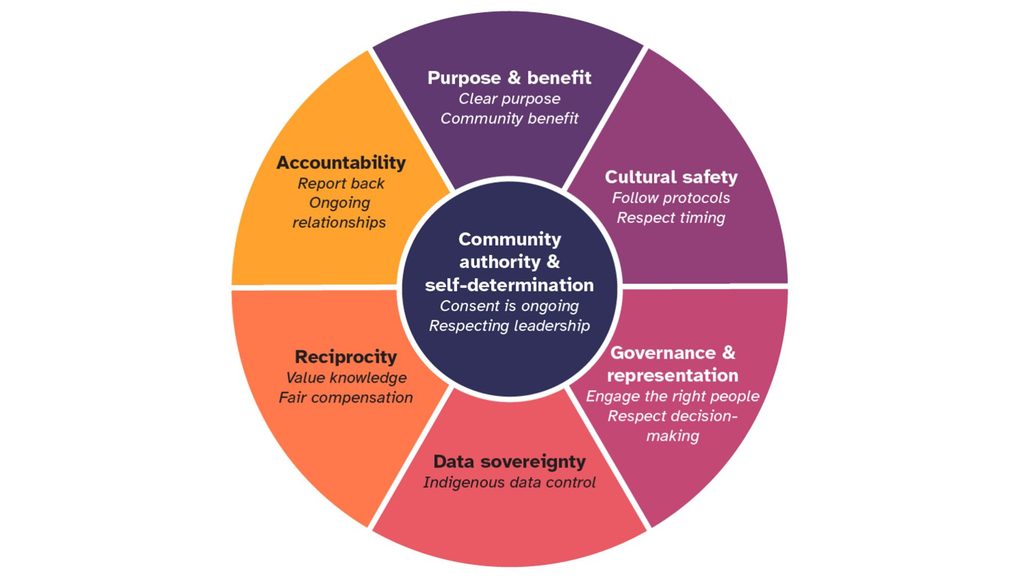
At the centre is community authority and self-determination, which covers respecting leadership and free, prior and informed consent. Around that sit six principles:
- Purpose and benefit: Why are we engaging, and who defined that purpose? Does the work match community priorities?
- Cultural safety: Are we following local cultural protocols, and is the timing right? Cultural safety means adapting to the community context.
- Governance and representation: Have we identified the right Traditional Custodians? Are Elders, community leaders or Aboriginal Community Controlled Organisations appropriately involved? Communities are not all the same, and authority structures differ across Nations.
- Data sovereignty: Who owns the information shared? Can the community review drafts before they are published? Data governance should reflect community expectations, not just organisational policy.
- Reciprocity: Are Elders and representatives paid fairly, in a way that is flexible and respectful? Cultural knowledge is intellectual property. The NAVA payment rates published by the National Association for the Visual Arts are a useful guide.
- Accountability: How will outcomes be shared back? Will the community see how their input shaped decisions? Trust is built through follow-through.
Applying design thinking
Design thinking is well suited to complex problems that are poorly defined.
Making sure older First Nations people understand their right to culturally safe aged care, including their right to complain, is a good example. There are many unknowns on both the client side and the community side.
A design thinking approach focuses on understanding the human needs involved, reframing the problem in human-centred terms, generating lots of ideas, and prototyping and testing in a hands-on way.
The culturally safe framework fits naturally within this, helping teams look at problems in a way that considers individuals, systems and communities.
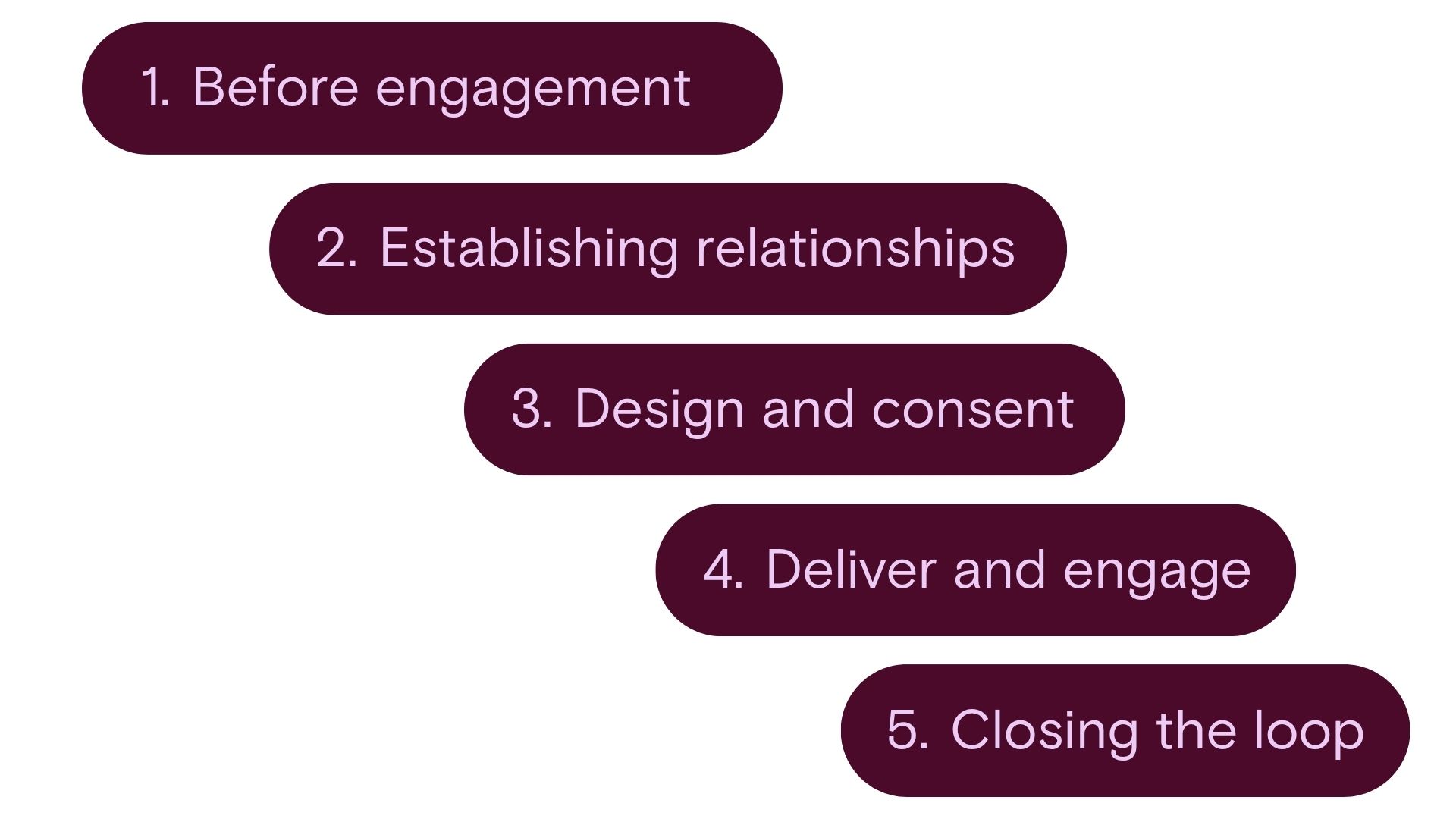
In practice, this can be broken into five stages:
- Before engagement: What do we need to do before we approach the community?
- Establishing relationships: What relationships do we need to build, or build on?
- Design and consent: What will the resources look like, and do we have community buy-in?
- Deliver and engage: Are we delivering in a way that works for the community, and are they part of that process?
- Closing the loop: How do we report back to the organisations and community members we worked with?
The double diamond
One useful tool for structuring this work is the double diamond.
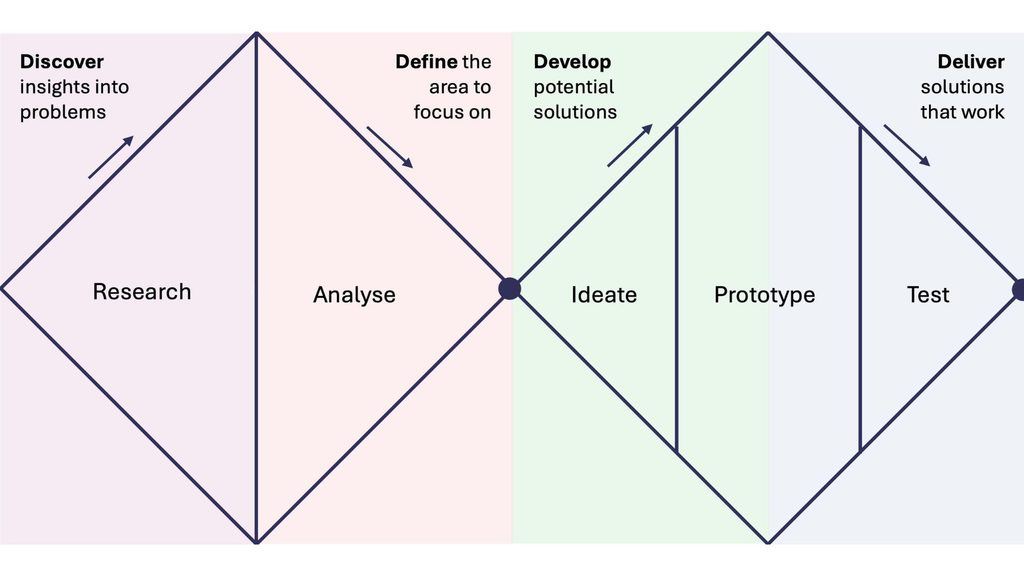
The first diamond widens during discovery, as research and insights are gathered, then narrows as findings are analysed and the focus is defined.
The second widens again during ideation and prototyping, then narrows as ideas are tested and refined. Either diamond can be repeated as many times as needed.
Each phase is an opportunity to bring in the client, stakeholders, audiences and, most importantly, the co-design group.
The tool can map out an entire project or help work through a single product or issue.
Co-design the process itself
Genuine co-design starts from the very beginning, with the community helping decide how the co-design process will work. How do people want to participate? How do they want to contribute?
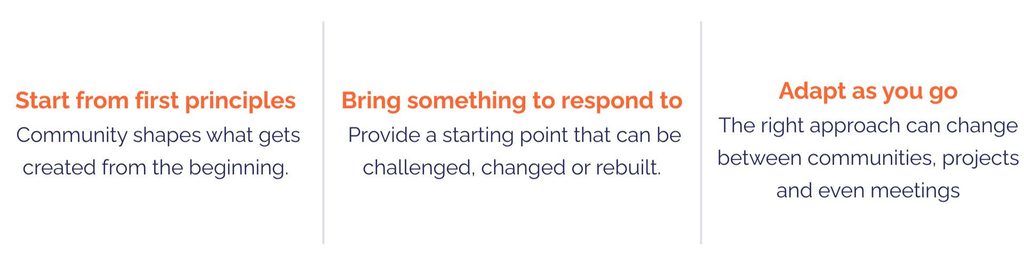
Some groups want to start from a blank page and shape the direction themselves. Others prefer the project team to bring options they can respond to, tweak or pull apart completely.
Neither is inherently more genuine. What matters is not imposing your preferred process on the community.
Bringing something to the table, such as research for the group to enrich with lived experience, or a design starting point, often shows respect for people’s time and understanding of the issues.
The key is not holding on to it too tightly. The right approach can change between communities, between projects and even between meetings, which is why there is no standard co-design template to replicate.
The same goes for timing. Sorry Business, cultural obligations and community priorities come first, and planned sessions may need to move. Build extra time into the schedule from day one, and be honest with clients that working to community timeframes is part of genuine co-design.
Co-design in practice
Aged Care Quality and Safety Commission
The Social Deck’s work with the Aged Care Quality and Safety Commission shows how community feedback can reshape an entire project.
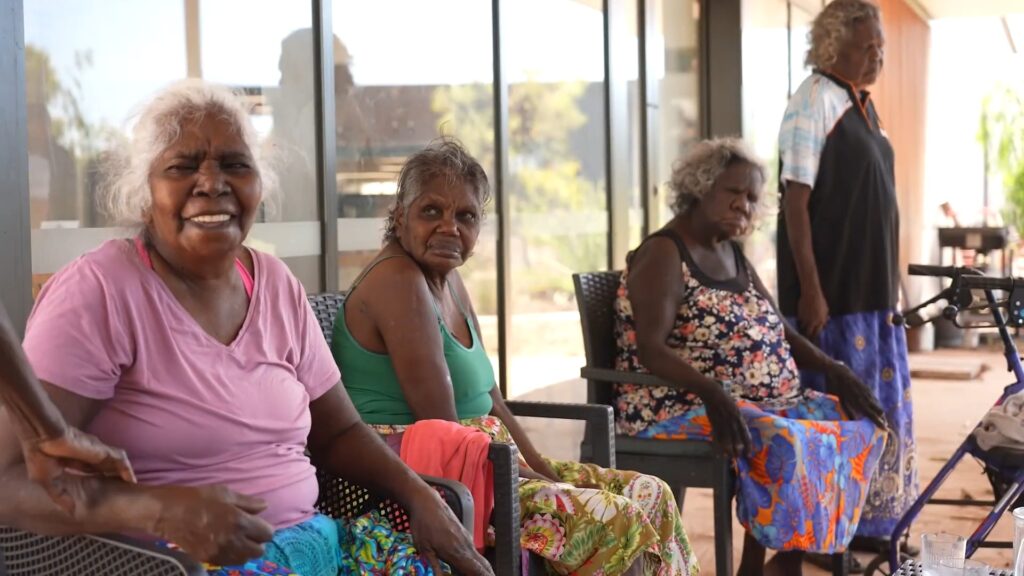
Animation was expected to be the main format. It avoids the cultural issues of showing people on screen after they pass away, and it translates easily into different languages. The community disagreed. For content aimed at older people, animation felt like treating them as children. They wanted to see themselves on screen.
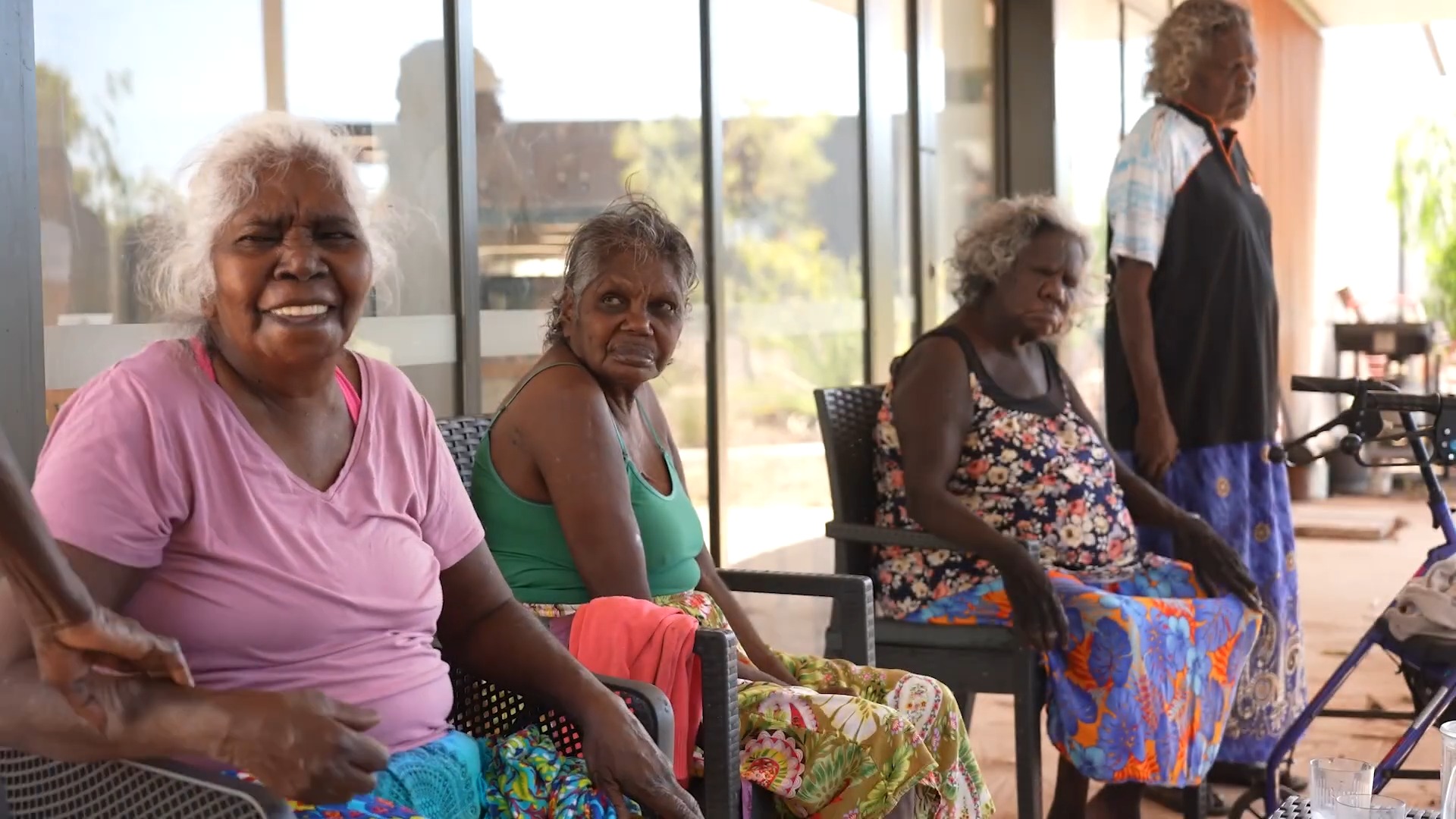
The project changed direction and produced live-action videos featuring real people. One was filmed on Yolŋu country in Nhulunbuy, at a residential facility the community helped design. Barawayu, who appears in the video, sat on the committee that designed the facility and now lives there.
Animation was still used for a product aimed more broadly at First Nations families and communities, where it remained the best fit. It was translated into five Indigenous languages, with translations by Ethnolink.
Aboriginal Postpartum Contraception
Punchy produced this animation with Sydney Local Health District and the University of Sydney for Aboriginal and Torres Strait Islander communities. It covers pregnancy spacing, planning contraception into the birth plan, and options that are safe while breastfeeding and do not affect future fertility.
The script went through two independent rounds of review: a focus test with detailed feedback, then a second, separate review. This meant the feedback reflected more than one group’s view before anything was locked in.
The following changes were made:
- Co-sleeping was only shown with the baby’s face clearly not facing down, as it is not normally encouraged.
- Icons that would not translate culturally were replaced.
- The home setting was reworked from a generic interior to one that reflects an Aboriginal home.
- Small details, such as frangipani flowers in the hair, were added.
The difference is between translating health information and testing whether the visual world of a video feels authentic and safe to its audience.
Culturally adapted ISBAR
This animation for NSW Health was developed in consultation with the Clinical Excellence Commission and NACCHO. It shows a paediatrician handing over care of a four-year-old Aboriginal boy with epilepsy to a GP at an Aboriginal Medical Service, using a culturally adapted ISBAR clinical handover framework.
Because the audience was healthcare workers, feedback was more clinical and concrete. It focused on whether the framework itself held up in a cultural context, not just how it was presented.
The standout change was family representation. Every scene where mum and bub visit a health worker had to include grandma, Aunty and Nan, showing intergenerational care and support rather than a purely clinical interaction. The adapted framework keeps the clinical handover clear while respecting family story and strengths, and it is framed as something clinicians reflect on and improve, not a checklist to tick off.
Working on a First Nations communications project?
At Punchy, we help government, health, education and not-for-profit organisations turn complex information into content people understand.
From animation and live action to design and photography, every project is built from scratch for its audience and shaped by the people it’s for.
If you’re planning a campaign or resource for Aboriginal and Torres Strait Islander communities, we’d love to hear about it.