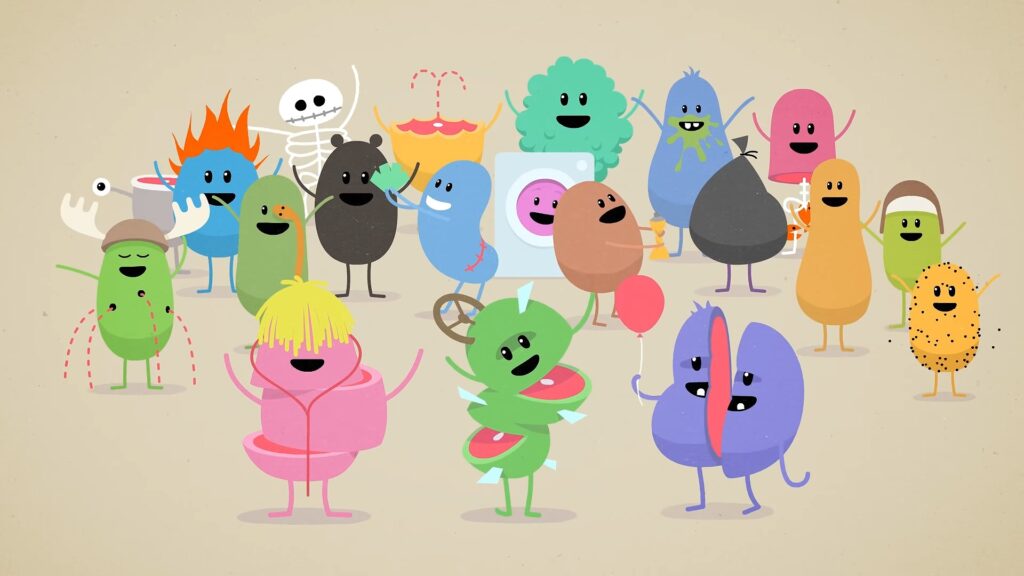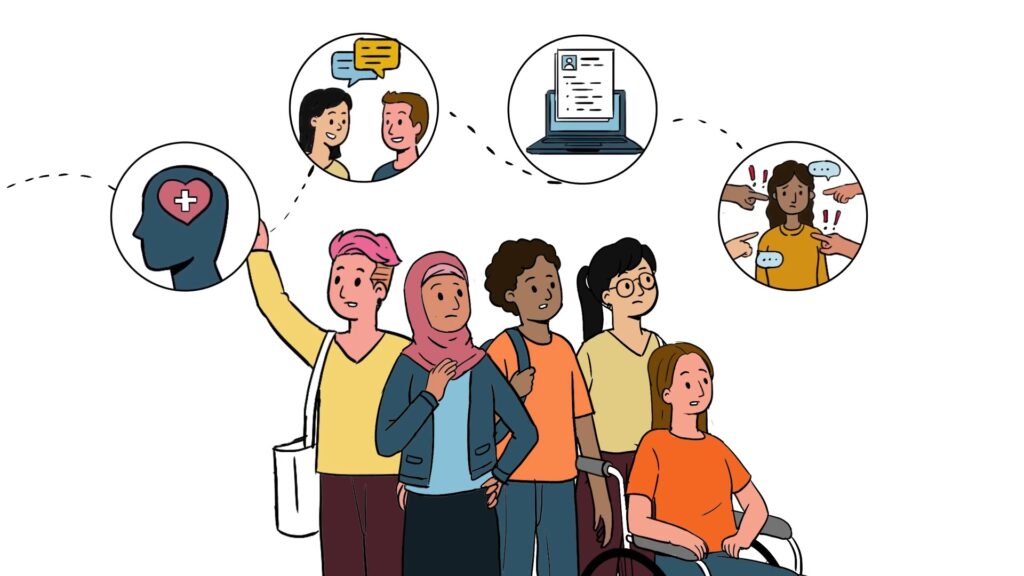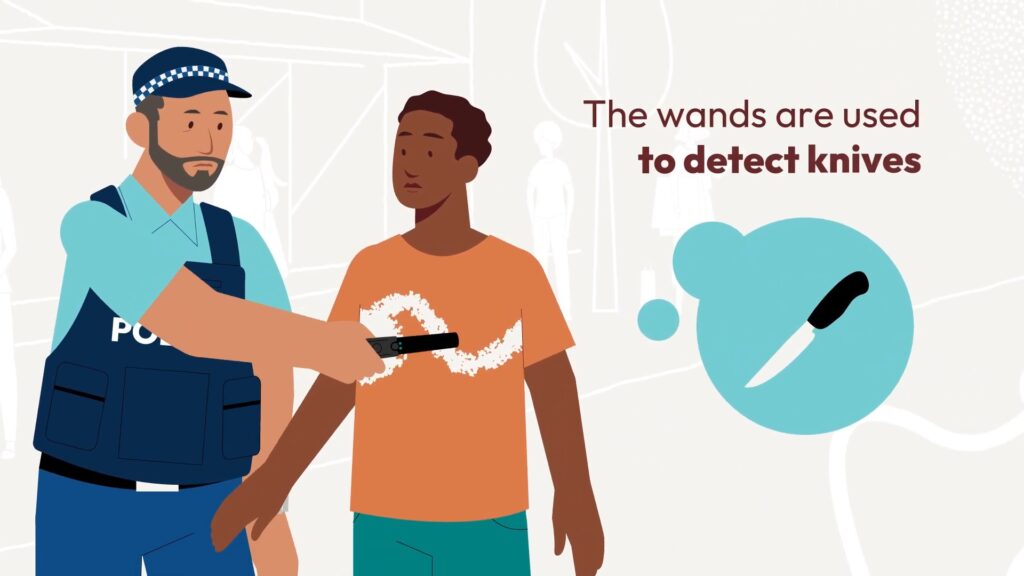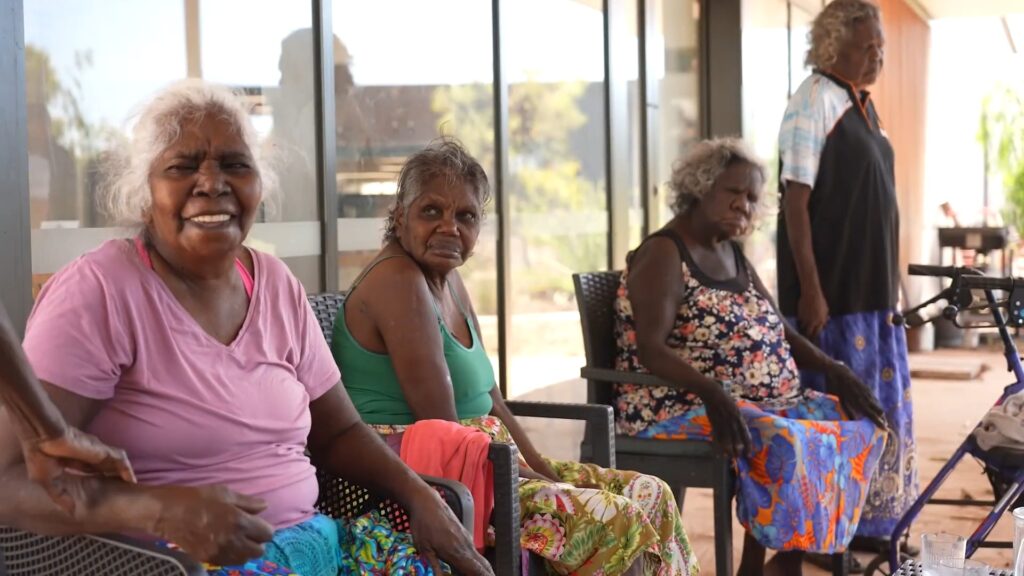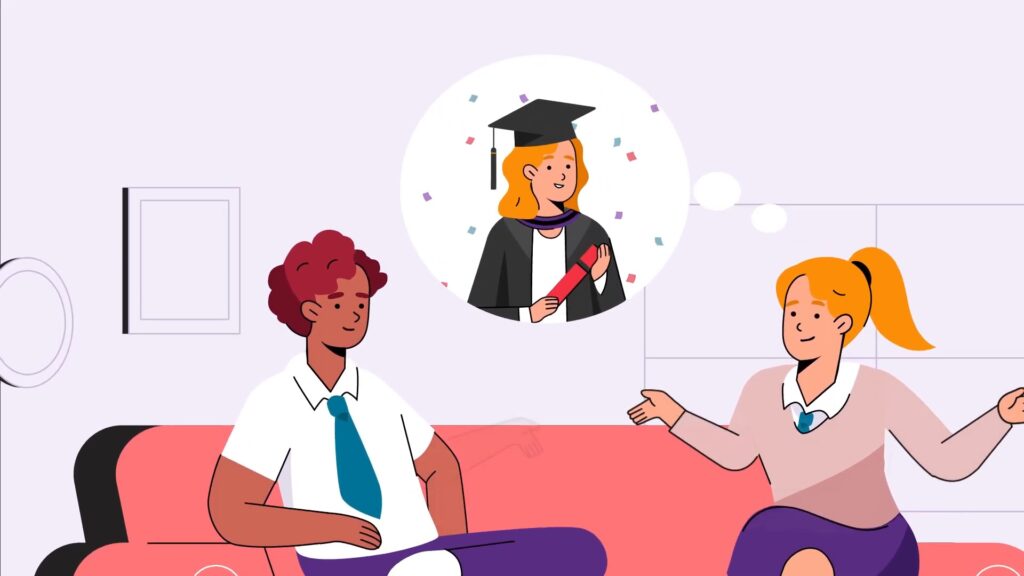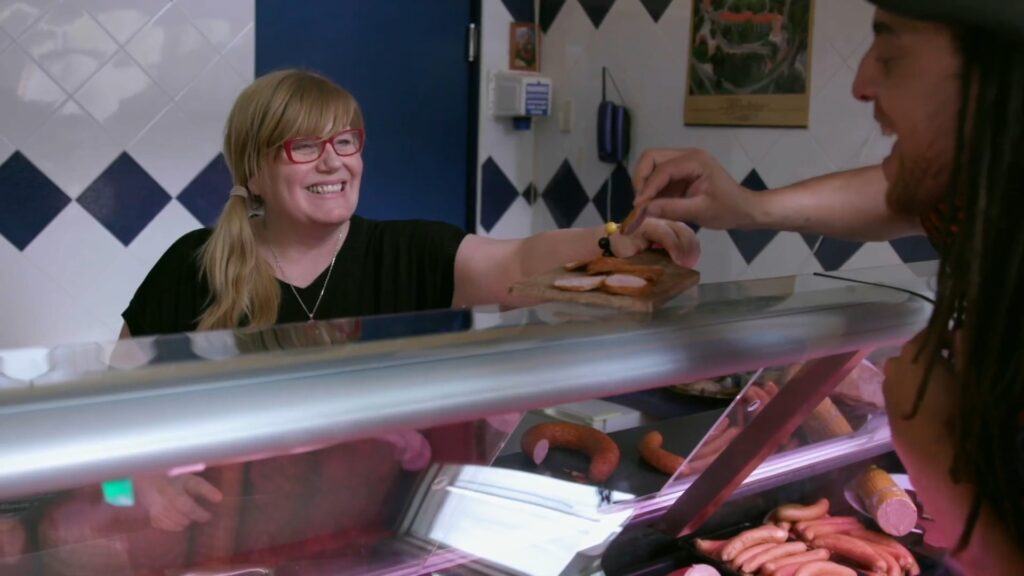
An animated explainer video for a higher education institution is a short, scripted video that uses illustration and motion graphics to explain a process, concept or opportunity. It can be created for prospective students, current students, alumni or industry partners, turning information that might otherwise be buried in a PDF, portal or policy document into something easier to understand.
The Australian Government’s Department of Education reports that the attrition rate for domestic commencing bachelor students was 12.2% for the 2023 cohort. That’s roughly one in eight students who start a degree not returning the following year. Confusing enrolment steps or poorly explained scholarship processes are rarely the sole reason a student leaves, but they are problems a university can actually do something about.
Punchy Studio is an animation studio with extensive experience across the higher education sector. Over 15+ years, we’ve produced more than 1,500 videos and 6,000+ minutes of content for government, healthcare, not-for-profit and education clients, including Monash University, the University of Queensland, the University of Melbourne, UNSW and Western Sydney University. This includes work across our explainer video and training video services.
In this post, we’ve rounded up 12 animated explainer videos relevant to higher education. Five were produced by Punchy for leading Australian universities, alongside seven strong examples from elsewhere in the sector. Together, they show how animation can support enrolment, explain research, attract prospective students and engage alumni.
Why Video Matters in Higher Education
The case for using video is well supported by research. A meta-analysis of 50 studies on instructional video technologies found that using video clips in class had a strong positive effect on learning outcomes overall (d = 0.688). Punchy has previously explored what this research means for institutions deciding where to invest.
For student-facing content, the findings support embedding video into course delivery rather than treating it as optional supplementary material. The same principle can be applied more broadly to enrolment guidance, recruitment and alumni engagement. Information that takes five minutes to read can often be communicated far more quickly through video. And when a student, prospective student or donor is already confused or disengaged, making that information easier to consume matters.
Types of Higher Education Video
Higher education communication challenges vary depending on the audience and what the video needs to achieve. The 12 examples in this post fall into four broad categories.
1. Enrolment and administrative navigation
These videos help students complete a specific process correctly, whether that’s choosing a unit, navigating an online system or completing the right forms. The focus is on making potentially confusing information clear and easy to follow. This type of content typically falls within our explainer video service.
2. Research and technical communication
These animations make research, methodologies or academic frameworks easier to understand for audiences outside the subject area. That might include industry partners, prospective postgraduates or the general public. The challenge is simplifying complex information without losing its meaning or accuracy.
3. Recruitment and program promotion
These videos are designed to attract prospective students to a degree, faculty or university. They often focus on the student experience, career opportunities and what makes a program distinctive. Depending on the message, this can involve animation or live action.
4. Alumni and giving
These videos speak to graduates and donors after their time as students. They might explain how donations are used, encourage alumni to stay connected or show the impact of ongoing support. The focus shifts from attracting an audience to maintaining trust and giving people a reason to stay involved.
The 12 examples below show how universities are using video across each of these areas.
12 Best Higher Education Explainer Video Examples
1. Monash University
Monash offers language units from absolute beginner through to proficient, and non-beginner students often don’t know where they fit. Getting placement wrong means sitting through a unit that’s either too easy to hold attention or too advanced to follow, and both outcomes push students toward dropping the subject entirely.
The training video we produced walks students through placement tests, gathering evidence of prior learning, and finding their way around Monash’s systems, with a clean academic aesthetic that matches the university’s existing digital presence. Motion graphics call out specific platforms like Moodle and Allocate Plus, so students know exactly where to look once the video ends, and the script repeatedly reassures viewers that teaching teams can adjust their placement if a unit turns out to be wrong.
We produced this for Monash University, deployed on the university website and student portals to correctly place language students ahead of semester start.
2. University of Queensland
UQ’s “Indigenous Success: Doing it, Thinking it, Being it” podcast, hosted by Dr Katelyn Barney and Professor Tracey Bunda, needed a promotional video that moved past barrier statistics to what actually works in university outreach to Aboriginal and Torres Strait Islander students, and why.
We produced a vibrant promotional piece using a culturally aligned design palette that reflects the diversity of voices in the series, covering topics like student ambassador programs, embedding culture into outreach design, and the pandemic-era shift to online engagement.
We produced this for UQ, deployed across social and academic channels to build listenership on Podbean. The work sits alongside our broader experience producing content for First Nations audiences.
3. University of Melbourne
Donors to the University of Melbourne needed to understand how their gift could continue making an impact decades after it was made. We created an explainer showing how the university’s Investment Portfolio pools and invests donations, while distributing funds at a target rate of 5% annually to support students through changing market conditions.
The video is used on the university’s giving website and in donor relations conversations.
4. Western Sydney University
Western Sydney University’s Pathways to Dreaming program introduces Aboriginal and Torres Strait Islander students in Years 8 to 12 to university life, often well before they’re ready to apply. The challenge was making university feel more familiar and accessible to students who may never have visited a campus before.
The animation we produced follows two young narrators through a campus visit, from the bus journey and workshops to cultural activities and conversations with staff and students. The conversational tone keeps the experience approachable, while also introducing other ways to participate, including in-school sessions and online yarning circles.
We produced the video for Western Sydney University as an introduction to Pathways to Dreaming across its on-campus and school-based programs for Aboriginal and Torres Strait Islander students.
5. University of New South Wales (UNSW)
UNSW Law & Justice needed its Bachelor of Laws to stand out in a crowded market. The video focuses on tangible differences, including 26 double degree options, a three-term academic year and the faculty’s focus on social justice.
We combined live action and animation to showcase real students and campus life while bringing key information and career pathways to the screen visually. From barrister and policy adviser to management consultant, the video gives prospective students a clearer picture of what studying law at UNSW could lead to.
This was part of a series Punchy produced for different UNSW courses, used across recruitment portals and social channels.
6. University of Melbourne
“Infinite Futures” promotes the University of Melbourne’s Melbourne Curriculum, its interdisciplinary framework spanning fields like urban planning, engineering, and medical science. Rather than describing any one discipline, the video uses fluid 3D textures and crystal-like structures to represent how different fields of knowledge interact and collide, an abstract approach to an abstract idea.
It’s an ambitious use of animation for a university promoting a philosophy rather than a specific course, and it’s included here as an example of how far the format can be pushed when the thing being sold is a mindset rather than a program.
7. University of Technology Sydney (UTS)
Published by the University of Technology Sydney, this showreel promotes the Bachelor of Animation Production through the work of its students rather than a traditional recruitment pitch. It brings together 2D animation, stop-motion, digital painting and experimental motion graphics created within the Faculty of Arts and Social Sciences.
The approach is simple but effective. Instead of telling prospective students what they could learn or create at UTS, the video shows them through the work of current students.
8. Monash College
International and pathway students often arrive with wildly different levels of maths preparation, and a one-size curriculum doesn’t serve any of them well. Monash College’s “Passport to Maths” introduces a tailored learning model that adjusts to individual career pathways and degree requirements.
The colourful 2D animation follows a student navigating digital learning platforms and interactive problem-solving modules, reassuring viewers that the program focuses on relevant skills rather than a blanket syllabus, with gamified learning and face-to-face support through the Mathematics Learning Hub.
9. University of Queensland
Published by UQ’s Faculty of Engineering, Architecture and Information Technology, this video introduces the EAIT Student Employability team to students who don’t yet know career services exist, let alone that they should start using them in first year rather than final semester.
Clean flat-vector animation follows a student from orientation through workshops, networking events, graduation, and into an office job, framing career skill-building as something that starts early rather than something to panic about before graduating.
10. University of New South Wales (UNSW)
Produced by Crazzy Arts Studio, this 2D motion graphics video introduces graduates to the benefits of staying connected with UNSW after they leave. It covers opportunities including short courses, digital journals, networking events and research collaborations.
Using a clean yellow and blue palette with simple icon-driven graphics, the video shifts the focus from student recruitment to alumni engagement, giving graduates practical reasons to stay involved with the university.
11. University of Sydney: Scholarships
Produced by Two Giraffes Studio, this explainer helps prospective international students navigate the University of Sydney’s scholarship options, from general and faculty-specific scholarships to government-funded programs with different eligibility requirements.
Flat-vector characters and UI-style graphics organise what could otherwise be a confusing amount of information, helping students understand their options and the importance of applying for their course early enough to also secure funding.
12. La Trobe University
Produced by Northey and Northey, this lighthearted animation follows a La Trobe graduate through different stages of their career before introducing the university’s global alumni community of more than 200,000 former students.
Clean line art and bright red accents keep the video approachable, while the message stays practical. By keeping their details up to date, graduates can access networking events, career support, postgraduate discounts, library services and mentoring.
Animation vs Live Action for Higher Education
The choice usually comes down to what the video needs to prove.
Animation is usually the right call when:
- The subject is invisible or abstract. This is most of what our explainer video service is built for.
- Representation needs to be controlled across a diverse and often international student cohort, without relying on which real students happened to be available to film.
- The content will be reused across multiple enrolment cycles and needs to age well rather than date with a particular cohort’s fashion or campus fit-out.
- Budget favours a single asset over a shoot requiring campus access, academic staff availability, and student consent.
Live action is usually the right call when:
- Authenticity is the entire point, real students, real campus energy, a real faculty rather than a stylised version of one.
- The setting itself sells the message, a lecture theatre, a lab, a graduation ceremony.
- Testimonials matter more than explanation, and prospective students need to see themselves reflected in a real person’s experience rather than a character design.
In practice, most higher education communications teams end up using both across different points in the student and stakeholder journey, animation for the process and concept work, live action for anything that needs a real face attached to it.
FAQs
What is an animated explainer video for higher education?
An animated explainer video for a higher education institution is a short, scripted video that uses illustration and motion graphics to walk a specific audience through a process, concept, or opportunity connected to the institution. Typically between 60 seconds and 3 minutes long, these videos are used by universities, colleges, and TAFEs to simplify enrolment steps, explain research tools, promote programs, and keep alumni engaged. The 12 examples in this post span administrative navigation, research communication, recruitment, and alumni and giving content, covering audiences from prospective school leavers to donors and graduates.
How long should a higher education explainer video be?
For process-driven content like enrolment navigation or scholarship explainers, 60 to 90 seconds usually covers what’s needed without losing the viewer partway through. Recruitment and promotional videos can run slightly longer, 90 seconds to 2 minutes, because the audience is more willing to be persuaded than instructed. Research and technical explainers, like the Melbourne Curriculum piece in this post, can justify 2 to 3 minutes if the audience is already motivated to understand the content, a prospective postgraduate or academic partner, for instance, rather than a first-year student skimming a portal.
Who needs to be involved in approving a higher education video before it goes live?
For most higher education projects, sign-off runs wider than a single marketing team. Content touching on enrolment or academic processes typically needs review from the relevant faculty or department to confirm accuracy, while anything involving First Nations content, students with disability, or international students usually benefits from consultation with the relevant support office before release. Legal or compliance review is common for scholarship, fee, or policy content where a misstatement has real consequences for a student. Building this approval chain into the production timeline from the start avoids a late-stage objection from a stakeholder who wasn’t looped in early.
Why use animation instead of live action for higher education communications?
Animation suits higher education particularly well when the subject is abstract (a research tool, a financial mechanism, a curriculum philosophy) or when representation across a diverse student cohort needs to be controlled rather than left to who’s available on the day of a shoot. It also ages better across multiple enrolment cycles, since illustrated characters don’t date the way real campus footage eventually does. Live action remains the better choice when authenticity is the actual selling point, as with UNSW’s Bachelor of Laws recruitment video, where real students and real campus energy do work an animated character can’t replicate. Many institutions use both, animation for process and concept, live action for testimonial and recruitment content built around real people.
How do you measure the success of a higher education explainer video?
Success measures should be defined before production starts, and they differ by content type. For enrolment and administrative videos, the metric that matters is usually completion of the process itself, correct placements, reduced support enquiries, fewer students stuck at a particular step. For recruitment content, it’s typically application or enquiry conversion rather than view count alone. For alumni content, engagement metrics like updated contact details or event attendance tend to matter more than reach. A distribution strategy defined before production starts makes all of these easier to track.
Conclusion
Across these 12 examples, the strongest videos aren’t trying to communicate everything at once. They solve a specific problem, whether that’s helping a student choose the right language unit, explaining how a donor’s money is managed or giving graduates a reason to reconnect.
That’s what separates useful higher education content from a generic “why choose us” video. The best examples start with something the audience genuinely needs to understand and build the content around solving it.
If you’re planning an animated or live action video for a university, faculty or higher education provider, we’d be happy to help find the right approach for the problem you’re trying to solve.
Get in touch to book a call.
Sources
- Australian Government Department of Education (2024), Key findings from the 2023 Higher Education Student Statistics. https://www.education.gov.au/higher-education-statistics/student-data/selected-higher-education-statistics-2023-student-data/key-findings-2023-student-data
- Lin, Y. & Yu, Z. (2023), A Meta-analysis Evaluating the Effectiveness of Instructional Video Technologies, Technology, Knowledge and Learning. https://link.springer.com/article/10.1007/s10758-023-09669-3