The Workplace Training Problem L&D Teams Already Know About
If you have spent any time running learning and development in a large organisation, you already know the pattern. The annual compliance module gets completed by 87 percent of staff. Six months later, an internal audit reveals that almost none of them can recall the core content. The training was delivered. The boxes were ticked. The behaviour did not shift.
This is the fundamental challenge L&D professionals are working against: completion rates and learning outcomes are not the same thing. Long-form e-learning modules with text-heavy slides and quiz checkpoints reliably produce the first and reliably fail to produce the second. The format is built around evidence of delivery rather than evidence of learning. And for organisations operating under tightening regulatory expectations, evolving compliance requirements, and high workforce turnover, the gap between completion and capability is becoming harder to ignore.
Video, used thoughtfully across an L&D programme, closes some of that gap. Not because video is inherently better than text or face-to-face training, but because it changes what learners do with their attention. Done well, video supports the kind of recall, application, and behaviour change that learning teams are actually trying to produce.
What L&D Teams Are Actually Trying to Achieve
Modern L&D functions sit across a wider remit than they did a decade ago. Compliance training and onboarding remain core, but learning teams are also responsible for leadership development, capability uplift in specific technical areas, soft skills development, change management support, professional development for accredited professions, and increasingly, support for new roles emerging in response to technology and regulatory change.
Each of these requires a different learning design, but they share common challenges. Learners are time-poor. Attention is fragmented. Many staff complete training on personal devices, in spare moments, with notifications and competing priorities pulling at their focus. Long-form learning content built for a desktop environment with uninterrupted attention is built for a context that does not exist for most workers.
This is where video, particularly shorter-form video used within a structured learning design, earns its place. Not as a replacement for instructor-led training where face-to-face contact matters, but as a way to deliver the content that does not benefit from synchronous delivery in formats that learners can actually engage with.
Where Video Outperforms Other Formats
Several specific use cases show up consistently across well-run L&D functions where video does measurably better than the alternatives.
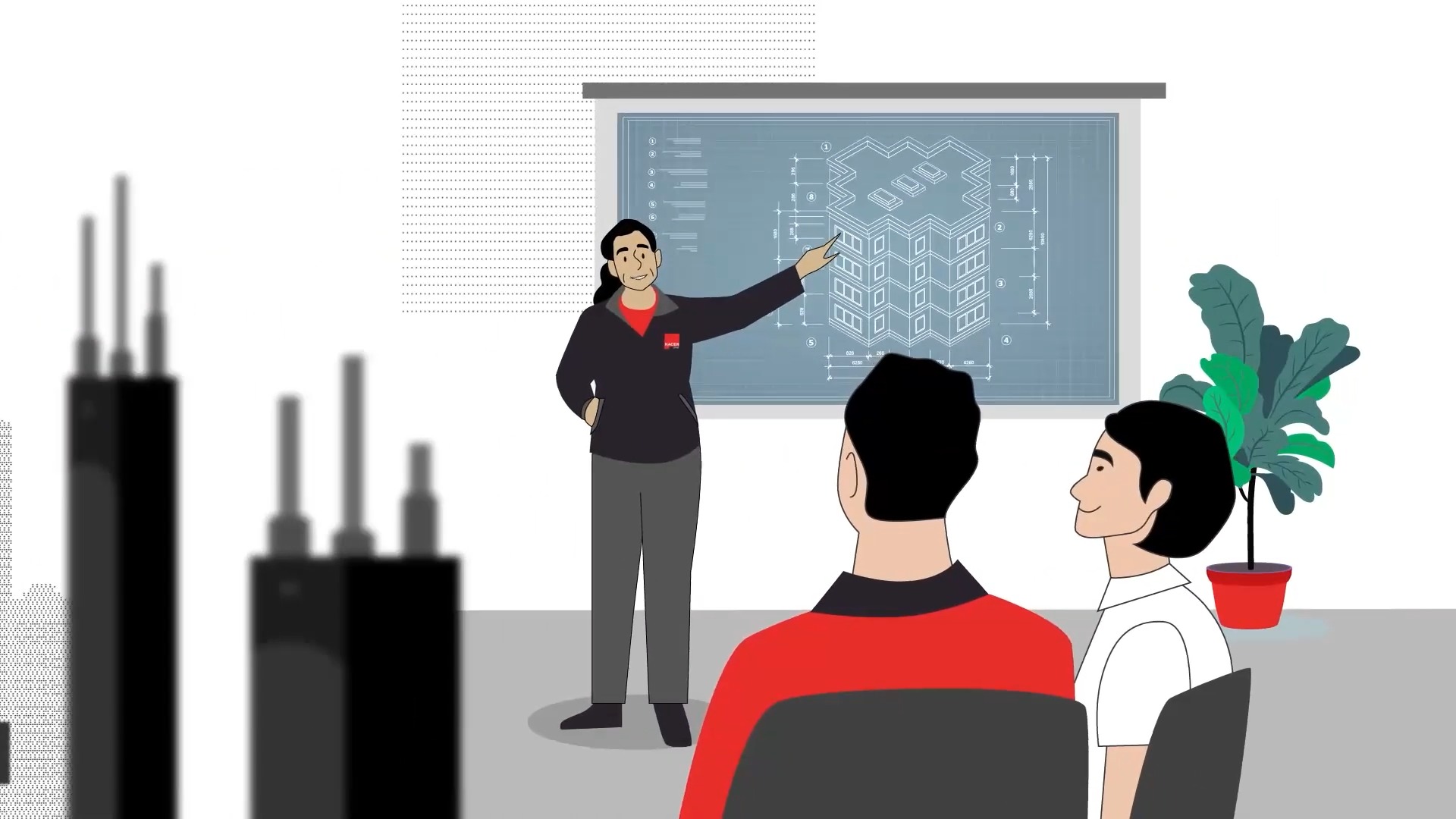
Induction and onboarding. New starters absorb organisational culture, processes, and people more efficiently through video than through written documentation. A library of short induction videos covering the organisation’s purpose, key teams, core systems, and operational rhythms gives new staff a faster ramp without consuming senior staff time. Training videos for induction work particularly well because they can be updated as the organisation evolves without requiring full re-recording.
Compliance training that needs to actually land. Annual compliance modules covering privacy, code of conduct, anti-bribery, work health and safety, and similar topics have a notorious reputation for being completed without being learned. Replacing long-form e-learning with shorter, scenario-based video content lifts both completion and recall. The scenarios should be specific to the organisation’s actual operating environment, not generic.
Leadership development. Leadership skills are difficult to teach through reading. Video can show what good and poor leadership behaviour looks like in context, give learners models to observe, and support the kinds of reflection that develop judgement over time. Senior leaders sharing their own experience on camera also gives learners access to thinking they would not otherwise encounter.
Technical and procedural training. Step-by-step procedures, particularly for complex equipment, software, or processes, are dramatically easier to learn from short demonstration video than from written documentation. The cognitive load is lower because learners can see exactly what is meant rather than translating words into mental images.
Soft skills and difficult conversations. Skills like having a performance conversation, handling a customer complaint, or supporting a colleague in distress are best learned by watching real-feeling examples. Video featuring realistic dialogue and considered direction lets learners observe the behaviours, then practice them in their own work.
Microlearning and Why Length Matters
The shift toward shorter learning content is not a fashion. It is a response to evidence about how attention and retention actually work in workplace contexts. Most learners can engage productively with a focused three to five minute video. Beyond that, attention fragments. Modules that try to cover too much ground in a single video lose the retention benefit they were designed to deliver.
This is why L&D teams investing in video are increasingly building libraries of short, single-purpose pieces rather than long composite modules. A 45-minute compliance module becomes nine five-minute videos, each covering one specific concept, scenario, or behaviour. Learners can complete them across multiple sessions. They can return to specific pieces when they need a refresher. Search and findability replace linear progression.
For learning designers, this means a different design discipline. Each short piece needs to stand alone, have its own learning objective, and earn the learner’s time independently. The structural work is harder because the pieces need to fit together as a coherent programme while each working as a standalone asset.
Where Video Should Not Be the Answer
Not every learning need is best served by video. L&D teams that get the most value from video are also clear about its limits.
Skills that require physical practice, like clinical procedures, equipment operation, and physical safety skills, need hands-on training and supervised practice. Video can introduce the concept and demonstrate the technique, but it cannot replace the practice itself. Treating video as if it could is a common pattern in organisations under cost pressure, and the resulting capability gaps tend to show up in incident reports.
Group dynamics, team building, and culture change initiatives often need face-to-face interaction to do their real work. Video can support these initiatives but rarely substitute for them. Learning designs that try to deliver culture work entirely through asynchronous video tend to under-perform.
Sensitive topics involving lived experience, mental health, family violence, or trauma require careful consideration about who appears on camera, how the content is framed, and what supports are wrapped around the learner. Video can be powerful in these areas but the production approach has to honour the sensitivity of the material.
Building a Video Capability Inside an L&D Function
For learning teams considering how to scale up video as part of their programme, a few principles tend to produce better outcomes than the alternatives.
Plan the programme, not the videos. Individual pieces should serve a programme-level design. Producing videos one at a time without that broader structure leads to a library that lacks coherence and is hard to navigate.
Invest in style and visual identity early. A consistent visual approach across the L&D video library makes the content recognisable, professional, and easier for learners to trust. This is where content strategy work pays off, because the upfront investment shapes everything that follows.
Build for adaptation. Workplace learning content needs to be updated regularly as systems change, regulations shift, and the organisation evolves. Modular production approaches that allow individual segments to be updated without re-shooting whole videos save significant cost over time.
Measure beyond completion. Learning teams investing in video should also be investing in better measurement. Completion rates tell you whether the content was opened. Recall, application, and behaviour change tell you whether it worked. To see how learning content has come together for organisations across sectors, you can view our portfolio here.
Ready to Strengthen Your L&D Programme
L&D teams under pressure to deliver more learning, on tighter timelines, to more dispersed workforces, with better outcomes, have a tough job. Video alone does not solve the problem, but used well as part of a thoughtful programme design, it shifts what is achievable.
If you are scoping a video component for an L&D programme, refreshing an existing library, or thinking about how to build internal video capability over time, get in touch with the team. We work with L&D and capability teams across government, NFP, health, and enterprise, and we are happy to talk through what an approach might look like for your specific context.