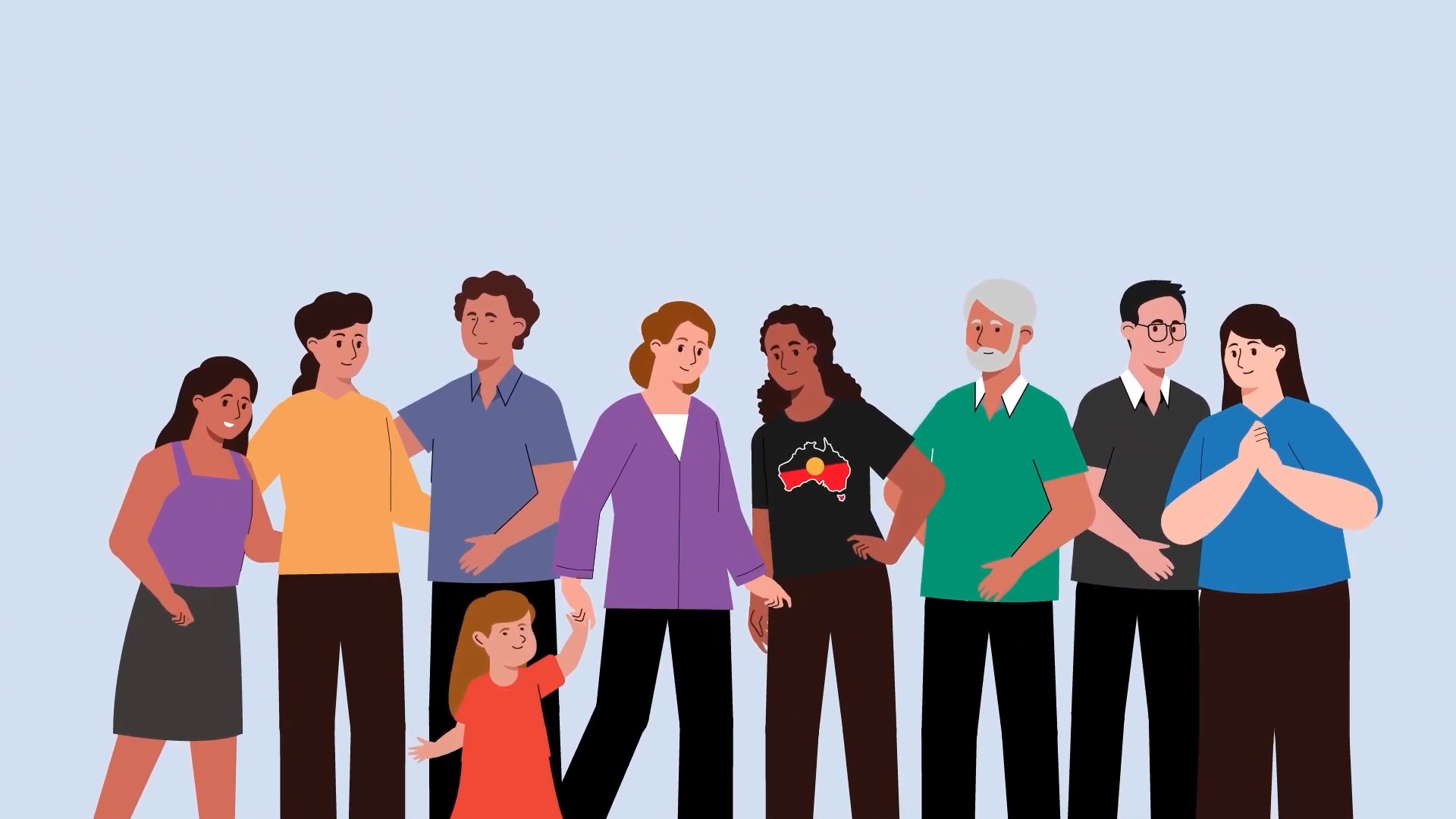
An explainer video is a short, scripted video that typically uses animation to communicate a specific idea clearly and efficiently. The format has become one of the most widely used in communications because it can take something complicated, unfamiliar, or easy to misunderstand, and make it land with the right audience in under two minutes.
That usefulness shows up in the numbers. According to Wyzowl’s 2025 State of Video Marketing report, 73% of video marketers say explainer videos are their single most-used format, and 91% of consumers have watched an explainer video to learn about a product or service.
Punchy Studio is a Melbourne-based animation and live action production studio. Over 15+ years we have produced more than 1,500 videos and 6,000+ minutes of content across government, healthcare, not-for-profit and education clients. Our work spans federal government, state government, health and aged care, not-for-profit, and enterprise clients.
This post maps ten distinct types of explainer videos, what each one is for, what makes it work, and a real example from our portfolio.
What Are the Different Types of Explainer Videos?
“Explainer video” is an umbrella term that covers a wide range of briefs, audiences, and production approaches. The ten types below are organised by function: what communication problem each one is built to solve, not what software style it uses.
The distinction matters because choosing the right type for your brief affects everything from script length to deployment channel to how success gets measured.
1. Customer Education Explainers
Customer education explainers help existing customers understand a product, service, or process they have already bought into but may not fully grasp. The goal is not to sell, it is to reduce confusion, build confidence, and reduce the burden on support teams.
They are commonly produced by utilities, financial services providers, insurers, and telcos, organisations where the customer relationship is long-term but the product is inherently technical or contract-heavy. Done well, these videos reduce inbound enquiries, lift self-service rates, and give customers a reason to feel informed rather than overwhelmed.
Our explainer video service handles most of this work, often as part of an ongoing content series rather than a single production.
Alinta Energy — Tariffs Explained
Alinta Energy is one of Australia’s largest gas and electricity retailers, serving residential and business customers across the country. Energy pricing is genuinely confusing for most customers: tariff types, usage rates, daily supply charges, and time-of-use structures all interact in ways that are difficult to explain in a bill or a PDF. Customers who do not understand their tariff are more likely to feel overcharged, switch providers, or call the support line.
The animation breaks down how energy tariffs work, the different types available, and what customers need to consider when comparing them. Alinta’s established brand system frames the content so it feels like a natural extension of the customer journey rather than a standalone explainer. The pacing is steady and the language is plain, which is exactly right for an audience that is engaged but not expert.
We produced this for Alinta as part of a long-running series that also covers smart meters, carbon offsetting, customer rebranding, and product initiatives, deployed across the retailer’s website, customer communications, and social channels.
2. Community Engagement Explainers
Community engagement explainers are produced by local councils, government agencies, and community organisations to inform residents about services, obligations, or local issues. The audience is broad and includes people with varying levels of English literacy, formal education, and prior knowledge of the subject.
Tone matters enormously here: too authoritative and residents disengage; too casual and the message loses credibility. Animation is particularly well-suited to this type because it allows diverse, relatable character representation without the cost and complexity of multicultural casting in live action.
These pieces typically sit on council websites, community portals, and social channels, often in conjunction with distribution strategies that include direct resident communications.
Fairfield City Council — Waste Contamination
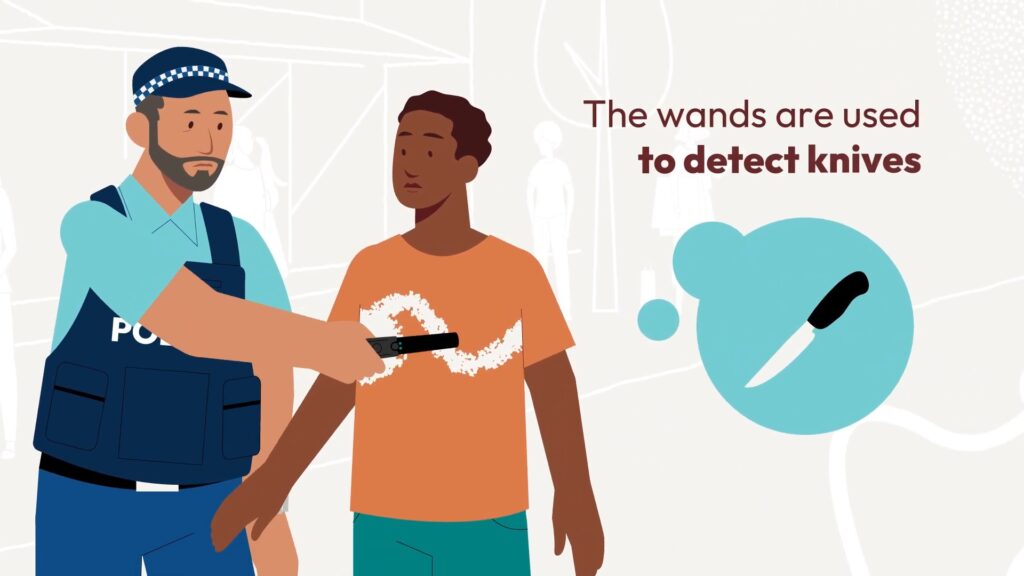
Fairfield City Council in south-west Sydney serves one of the most culturally diverse local government areas in Australia. Waste contamination, when incorrect items end up in recycling and FOGO bins, is a persistent and costly problem for councils: it drives up processing costs, lowers recycling rates, and can send entire truckloads to landfill. The brief was to help residents understand what contamination actually is, which items are the most common culprits, and how to sort correctly day to day.
We produced this for Fairfield’s waste education channels, including their website, social media, and direct resident communications. It sits alongside a broader body of work Punchy has produced for local council clients across Australia.
3. Product and Service Explainers
Product and service explainers are the closest thing to a universal format in video marketing. Their job is to answer the question every prospective customer has when they first encounter an unfamiliar business: what does this company actually do, and why should I care?
They are typically 60 to 90 seconds, sit on a homepage or landing page, and are designed to give a sales team something to anchor a conversation around. The challenge is almost always scope: clients want to include everything, but the videos that work are the ones that resist that instinct and pick one thread. Audience research before scripting can be the difference between a video that converts and one that explains without persuading.
Defit Group — Company Explainer
Defit Group specialises in industrial defit and strip-out services for commercial fitouts. It is a niche B2B service that sits somewhere between demolition and construction, and for a prospective client encountering Defit for the first time, dense technical copy on a website does not communicate the offer clearly or quickly. The brief was to make the service feel clear, professional, and trustworthy to decision-makers who might otherwise scroll past.
The animated explainer walks through what Defit does, who it is for, and what distinguishes their approach, in a single confident sequence. We produced this for use across the Defit Group website and in business development conversations, giving the sales team a consistent and professional introduction tool when reaching out to new prospects.
4. App and Platform Explainers
Unlike a product explainer, which might focus on a company’s overall offer, app explainers need to convey the experience of using something, the feel of it, not just the function. They work best when they show the platform in action through characters who represent the actual target user, making it easy for the audience to place themselves in the scenario. They sit at the top of an acquisition funnel and their job is to earn the click to sign up.
Canteen Australia — Canteen Connect
Canteen Australia is the national not-for-profit supporting young people impacted by cancer in the family. Canteen Connect is their online peer support community, a platform designed to give young people a place to connect with others who genuinely understand what they are going through. The brief was to reach young people, parents, and health professionals with a single clear message: this is a safe, judgement-free space, and it is for you.
We produced this for Canteen for deployment across their website, hospital referral pathways, and social channels, with the goal of driving sign-ups and building community awareness among the not-for-profit and health sectors.
5. Process and How-It-Works Explainers
Process explainers make invisible systems visible. They are built for situations where the thing being communicated is real and important but cannot be observed directly, such as a compliance framework, a set of quality standards, a care pathway, a workflow that spans multiple teams or stages.
These are common in professional services, government, health, and regulated industries, anywhere that the gap between knowing a policy exists and understanding how it actually operates causes problems.
The best ones give the audience a clear reason to care about the process before they explain how it works. Our training video service covers much of this type.
VMIAC — Best Practice Quality Service
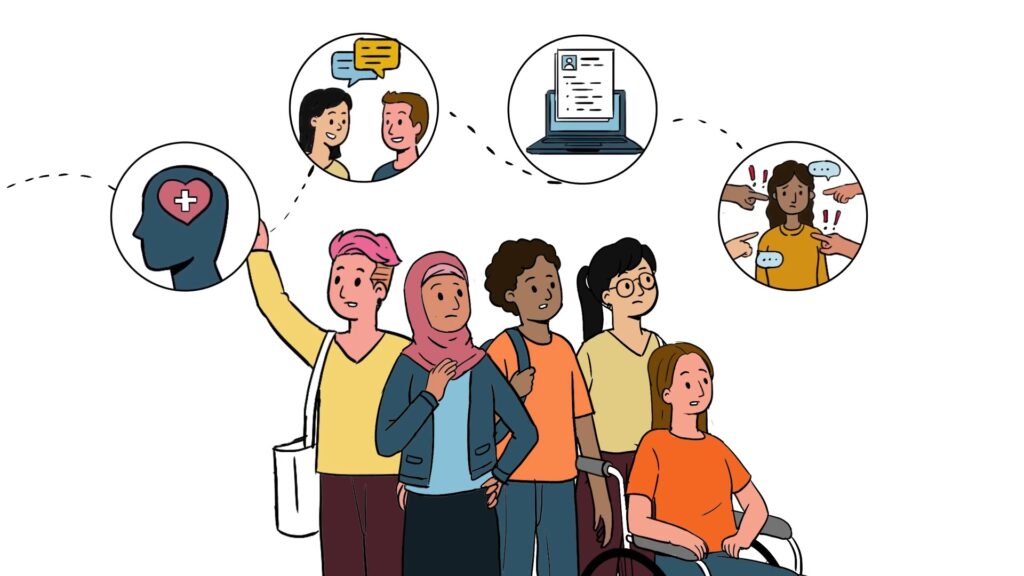
VMIAC is the Victorian peak body representing people with lived experience of mental health issues and emotional distress. As part of their work supporting the mental health sector, VMIAC needed to communicate what best practice quality service looks like from a consumer perspective, and to do so in a way that mental health workers and service providers could genuinely apply. The challenge was that the principles involved, respect, transparency, collaboration, recovery orientation, are easy to agree with in the abstract but hard to translate into concrete day-to-day practice.
The animated explainer grounds each principle in clear examples, showing what the standard looks like when it is met and what it looks like when it is not. A warm illustrative style and deliberate pacing reflect the sensitivity of the subject matter, and the script is written with the service user’s perspective at its centre throughout. The video avoids the tone of an audit or compliance piece; it reads as a resource that people will actually want to use.
6. Recap and Annual Summary Explainers
Annual report videos and recap explainers are produced when an organisation needs to communicate a year’s worth of activity to a broad audience that will not read the document.They are most common in local government, peak bodies, and not-for-profits that have accountability obligations to ratepayers, members, or funders, but whose annual reports are rarely read beyond the people who wrote them.
The challenge is distilling a year’s worth of data, milestones, and investments into something watchable in under two minutes. Motion graphics are the workhorse here because they make statistics and achievements legible at a glance.
Redland City Council — Your Council
Redland City Council, on Queensland’s Moreton Bay coast, needed an accessible video summary of the 2022-23 financial year for its ratepayer community. The annual report itself covered the full breadth of council investments, capital works, and service delivery, but the goal here was to make the key highlights land with residents who would never open the PDF. The brief was to reach a broad community audience through the council’s digital channels at the time of the report’s public release.
We produced this for Redland’s website and social channels, as part of an ongoing relationship that has also covered waste education and coastal erosion communications for this local council client.
7. Behaviour Change Explainers
Behaviour change explainers are built around a specific, measurable action the audience needs to take (or stop taking). Portraying information is a component, but the real job is to shift what the audience does, not just what they know. These briefs typically come from public health agencies, community organisations, government departments, and peak bodies working on population-level issues.
What distinguishes a good behaviour change video from a generic awareness piece is usually the research on the audience that sits underneath it. Audience analysis is not optional on these briefs as it is where the strategy should always starts.
Southern Aboriginal Corporation — Job Readiness
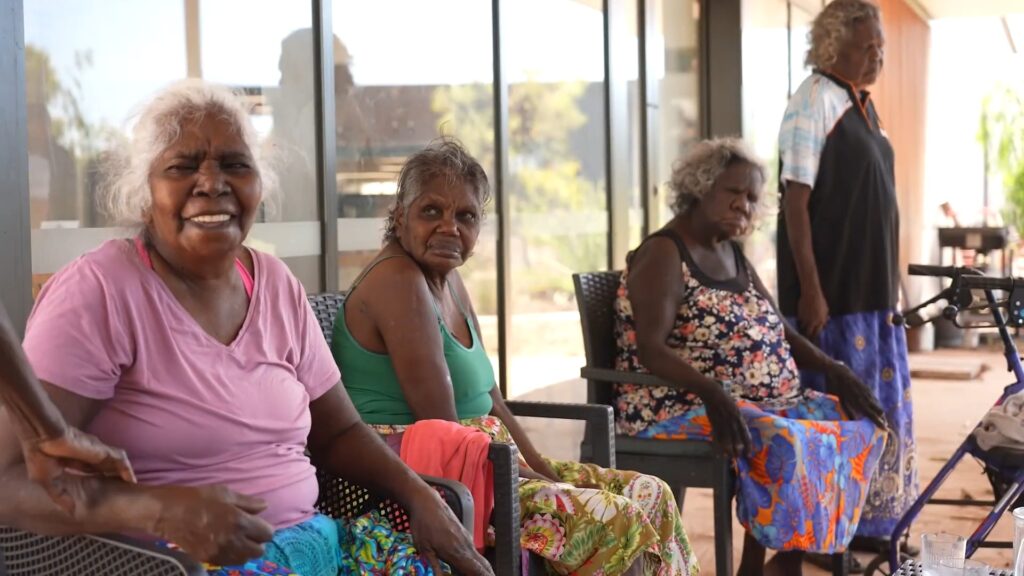
Southern Aboriginal Corporation (SAC) is an Aboriginal community-controlled organisation based in WA’s Great Southern region, delivering services that support Indigenous community members. The brief was to introduce SAC’s job readiness program to community members preparing to enter or re-enter the workforce, alongside funding bodies that needed to understand the program’s reach and purpose.
The production uses a whiteboard-style animation with culturally considered visual motifs including yarning circles, footprints, and pathways, drawn by a brown-toned animator’s hand to reflect an Indigenous storytelling perspective. The voiceover was performed by a female Indigenous Australian artist, keeping the piece grounded in community voice rather than institutional voice. This is the distinction that matters on briefs like this one as authority needs to come from inside the community, not be directed at it.
The work draws on Punchy’s broader experience producing communications for Aboriginal and Torres Strait Islander audiences.
8. Medical and Health Explainers
Medical explainers sit at the intersection of clinical accuracy and plain language communication. Their audience is usually patients, families, or carers who need to understand a condition, treatment pathway, or care process well enough to act on it, often in a period of high stress or emotional vulnerability.
Animation is particularly well suited here because it removes the ethical complexity of filming patients or clinical settings, allows representation to be controlled, and softens the emotional weight of subjects that can be frightening to engage with in realistic formats. This is a large part of our health and aged care portfolio.
Stroke Foundation — 12 Things You Need to Know About Stroke
The Stroke Foundation is a national charity dedicated to preventing, treating, and beating stroke in Australia. The recovery journey after a stroke is daunting precisely because it spans so many domains, such as the immediate emergency response, hospital treatment, rehabilitation, and long-term lifestyle adjustment. Patients and families are often discharged with information that is clinically complete but practically overwhelming. The brief was to distil the most important post-stroke information into 12 clear points that a recently discharged patient or family member could absorb in a single sitting.
The animation covers both the physical and emotional dimensions of recovery, including post-stroke fatigue, depression, and driving restrictions, topics that are clinically important but often missed in hospital discharge conversations. Clear iconography and a reassuring voiceover carry the content without making it feel like a lecture.
9. Brand and Values Explainers
Brand and values explainers answer the most fundamental question any organisation faces in its communications: who are you and why does it matter? These videos typically live on a homepage or an “about us” page, they are the first thing a new stakeholder, funder, partner, or potential employee watches, and they often need to work for multiple audiences simultaneously.
Most organisations have a lot to say about themselves, and the discipline required to say it in 90 seconds without losing what is distinctive is considerable. The goal is to provide a video that is clear, specific, and genuinely representative of the organisation’s identity.
AUSMASA — About Us
The Mining and Automotive Skills Alliance (AUSMASA) is one of ten Jobs and Skills Councils established by the Australian Government, bringing together employers, unions, and governments to address workforce and training challenges across the mining and automotive sectors. The communication problem was that the tripartite structure and the strategic functions AUSMASA performs, workforce planning, training product development, policy advice, are not self-evident from the name alone.
The animation uses clean graphics and an authoritative voiceover to walk through AUSMASA’s role as the central link between industry, training providers, and government. The visual treatment reflects the industrial and strategic character of the organisation without feeling heavy or bureaucratic. It positions AUSMASA as a source of sector intelligence, not just a coordination body, which is the distinction that matters most for its key audiences.
10. Emergency Awareness Explainers
Emergency awareness explainers are produced by government agencies, emergency services, and community organisations to help the public understand and respond correctly to safety risks. The brief is high-stakes, as the video might be the thing that determines whether a person makes a safe decision in a crisis. That means clarity is not a stylistic preference but an operational requirement.
These videos need to be instantly understandable, actionable, and memorable. They also need to be accessible across a broad demographic, since emergency information cannot afford to exclude any part of the population it is trying to protect. Animation allows the use of the official visual language of emergency systems (colour scales, icons, maps) in a format that is more engaging and more shareable than static materials alone.
Country Fire Authority — Fire Danger Ratings
The Country Fire Authority (CFA) is Victoria’s volunteer and community-based fire and emergency services organisation. The brief was to help Victorians understand and respond to the Australian Fire Danger Rating System. The challenge is that most people are broadly aware the rating system exists but do not know what they are actually supposed to do at each stage.
The animation uses the official colour-coded rating scale as its visual anchor, walking viewers through the safety precautions appropriate to each level. Critical life-safety advice, such as leaving high-risk bushfire areas early in the morning or the night before a catastrophic day, is presented in plain terms without softening the urgency. The voiceover is calm and authoritative rather than alarming, because the goal is not to create panic but to prompt specific, informed action.
We produced this for deployment across CFA digital platforms and Victorian emergency portals, ensuring residents and travellers have access to clear, actionable guidance. This work sits within our experience producing safety communications for state government clients across Australia.
Animation vs Live Action for Explainer Videos
When clients come to us with an explainer brief, the format question comes up early. Both animation and live action can deliver a strong explainer video, and the right answer usually comes down to what the video needs to do and where the risks lie in production.
Animation is usually the right call when:
- The subject matter is abstract, invisible, or hard to film (a compliance framework, a digital platform, a financial process, a care pathway).
- Diverse representation needs to be controlled without the cost and complexity of multicultural casting.
- The emotional weight of the subject benefits from a softer visual register (mental health, bereavement, medical conditions).
- The video will be deployed for years and needs to age well without actors’ appearances or branded environments dating it.
- The audience is broad and the content needs to work across literacy levels and cultural backgrounds.
Live action is usually the right call when:
- Authenticity is the point: real people, real voices, real settings carry the message in a way animation cannot replicate.
- The organisation’s physical environment or people are part of what needs to be communicated.
- You are producing a case study video or testimonial piece where the human face does more work than any animated character can.
- The audience needs to trust that what they are seeing is real, not a stylised version of it.
FAQs
What is an explainer video?
An explainer video is a short, scripted video designed to communicate a single idea clearly to a defined audience. It typically runs between 60 seconds and three minutes and uses animation, motion graphics, or live action to make a product, service, process, or concept easier to understand and act on. The format is used across virtually every sector, from utilities and financial services to healthcare, government, and not-for-profit, because the underlying communication problem it solves is universal. As the 10 examples in this post show, “explainer video” is not a single format but a broad category that includes customer education pieces, behaviour change campaigns, brand anchors, emergency information resources, and more. What they share is the same core intent: close the gap between what an organisation knows and what its audience needs to understand.
How long should an explainer video be?
For most consumer-facing explainer videos, 60 to 90 seconds is the sweet spot. Audiences watching on a website or social channel are making a continuous decision to keep watching, and attention drops sharply past two minutes for content that is not entertainment. For process explainers, training pieces, and professional development content where the audience is watching with intent, two to five minutes works because the viewer has an obligation to stay with it. The right answer is almost always shorter than the client’s first instinct.
What makes an explainer video actually work?
The videos that work are the ones where the brief was tight before production started. That means a defined audience, a single clear message the video needs to land, and a deployment context that has been thought through rather than added at the end. Animation choices, voiceover tone, pacing, and visual style all flow from these upstream decisions. The most common failure mode is a video that tries to say too much to too many people, covering all the material but does not change anything for anyone. The second most common failure mode is treating the video as finished once it is delivered, without a distribution strategy to get it in front of the right audience. A well-made video sitting on a page nobody visits does not solve the communication problem it was built to solve.
What types of organisations use explainer videos in Australia?
Virtually every sector uses them, but some have particularly strong track records. Local councils use community engagement and annual summary explainers to reach diverse ratepayer audiences. Government agencies use emergency awareness and process explainers for public safety and compliance communication. Healthcare peak bodies and charities use medical and behaviour change explainers to lift health literacy and prompt action. Utilities and financial services companies use customer education explainers to reduce support costs and build confidence in their products. Not-for-profits and community organisations use app explainers, brand and values pieces, and behaviour change videos to grow their reach and demonstrate impact to funders.
How do you choose the right type of explainer video for your brief?
Start with the communication problem, not the format. Ask what the audience currently understands or believes, what they need to understand or do differently, and what is stopping them from getting there. A customer who is confused about their energy tariff needs a customer education explainer. A resident who is putting the wrong items in the recycling bin needs a community engagement explainer with clear visual examples. A young person who has never heard of a peer support platform needs an app explainer that shows them how it feels to use it. Once the problem is defined, the type usually follows. If you are unsure, a content strategy conversation before briefing production can save considerable time and budget downstream.
Conclusion
The 10 types in this post look different on screen, in audience, and in brief. What they all share is a specific communication gap, a defined audience, and a video format calibrated to close it.
The customer education explainer for Alinta Energy is solving a different problem from the emergency awareness piece for the CFA, which is solving a different problem from the behaviour change video for Southern Aboriginal Corporation. The format is the same, but the job is entirely different.
What separates the explainer videos that work from the ones that do not is whether the brief was clear enough before the script was written. The organisations in this post that got the most from their videos were the ones that came with a defined audience, a single message, and a deployment plan, not just a topic.
If you are scoping an explainer video and are not yet sure which type fits your brief, that is a normal starting point. Most good briefs begin with a conversation, not a specification.
Get in touch to book a call.
Sources
- Wyzowl (2025), State of Video Marketing Report. https://www.wyzowl.com/video-marketing-statistics/
- Vidico (2026), 50+ Short-Form Video Statistics in Australia. https://vidico.com/news/short-form-video-statistics-australia/