Inclusive production is a structured approach to creating video and media content that authentically represents people with disability, both on screen and behind the camera, by building inclusion into the brief, casting, crew, and delivery process from day one rather than treating it as an afterthought.
For most communications professionals, “inclusive” has historically meant adding captions or checking a diversity box in a casting brief. The research says audiences have moved well past that. According to the 2026 Inclusion Imperative Report, developed by Inclusively Made in partnership with Bupa Australia and Atomic 212°, 70% of Australians say accessible media is important to them, 70% trust brands more when they see authentic disability representation, and 49% cannot name a single brand currently doing disability inclusion well. The gap between demand and supply is wide open, and the organisations moving into it first are being rewarded in measurable ways.
Punchy Studio recently completed formal training with Inclusively Made, the Australian certification body that has developed the country’s leading framework for inclusive production. This post shares what we learned, how it has shaped the way we work, and what it means practically for communications managers, marketing leads, and program officers across government, healthcare, not-for-profit, and education who are commissioning video in 2026.
Inclusion Is Not a Values Decision Anymore
That framing comes directly from the data.
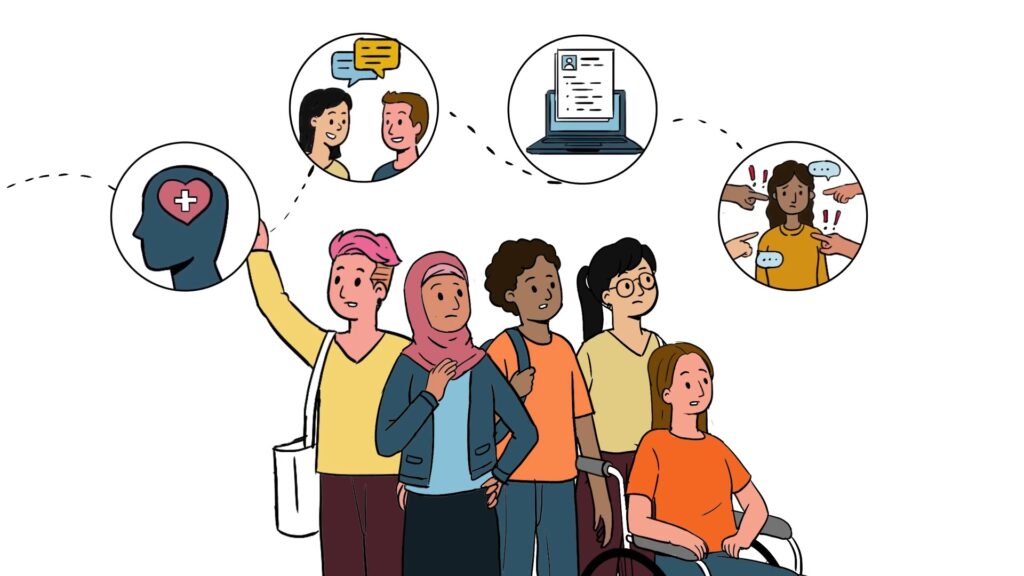
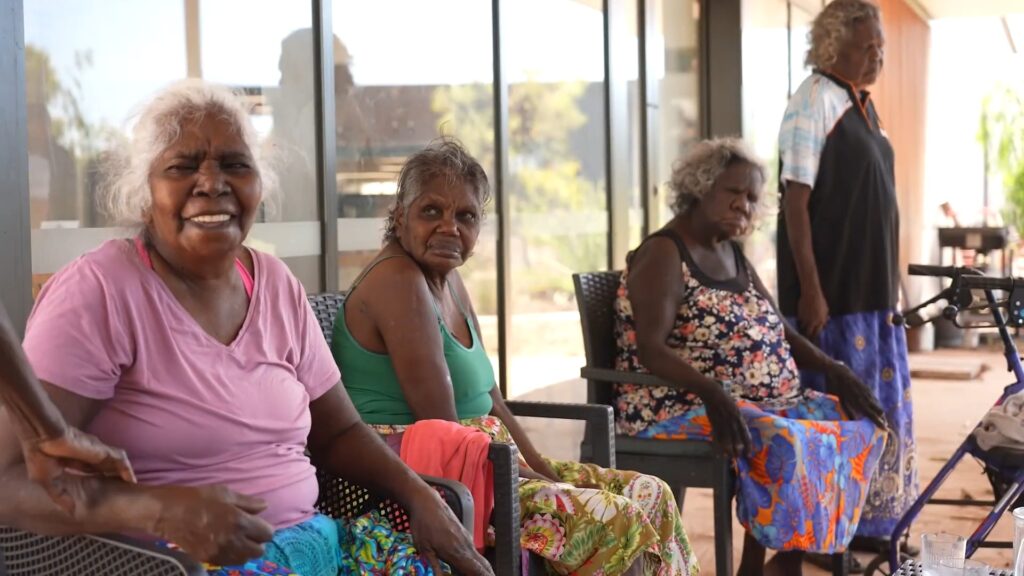
One in five Australians lives with a disability, according to the AIHW. This is a significant portion of every audience a government agency, peak body, hospital, or university is trying to reach. And yet, as the Inclusion Imperative Report makes it clear that representation in Australian media has not kept pace with that reality. When half your audience cannot see themselves in the content you produce, they notice, and they respond accordingly.
The report found that 53% of Australians are more likely to recommend brands that advertise inclusively, and that brands with high NPS grow revenue 2.5 times faster than competitors. For organisations in the public and community sectors, that same dynamic plays out as trust, referral, and service uptake rather than revenue. When people feel seen in your communications, they engage more deeply with what you are saying.
If inclusion is not in the brief, it will not be in the cut. And if it is not in the cut, a meaningful share of your intended audience will experience your content as not made for them.
What the Inclusively Made Framework Actually Covers
The Inclusively Made certification framework is built around eight pillars, scored across 100 points. Understanding the structure matters because it shows inclusion is not a single thing, but a set of decisions made across the entire lifecycle of a project.
The eight pillars are:
- Inclusive Concept Development
- Inclusive Casting
- Inclusive Work Experience
- Inclusive Crew Roles
- Accessible Documentation
- Accessible Locations
- Safe and Inclusive Environment
- Accessible Broadcast
Each pillar is something a production team can plan for before production begins, which is the central insight of the framework.
For a government agency or not-for-profit organisation commissioning a video, this means the conversation about inclusion should happen at the brief stage, not the delivery stage. By the time a video reaches post-production, the casting is locked, the script is approved, the voiceover has been recorded, and the locations (for live action) have already been used. Most of the decisions that determine whether a piece of content is inclusive or not have already been made.
Where Inclusion Actually Lives in a Production
In the script and concept
The first pillar, Inclusive Concept Development, is where inclusion either gets built in or gets missed entirely. Writing characters with disability into the concept from draft one is different from adding them in revisions. The revision approach produces tokenistic representation: a character who appears in one scene, whose disability is incidental rather than integral, and whose presence reads as a box ticked.
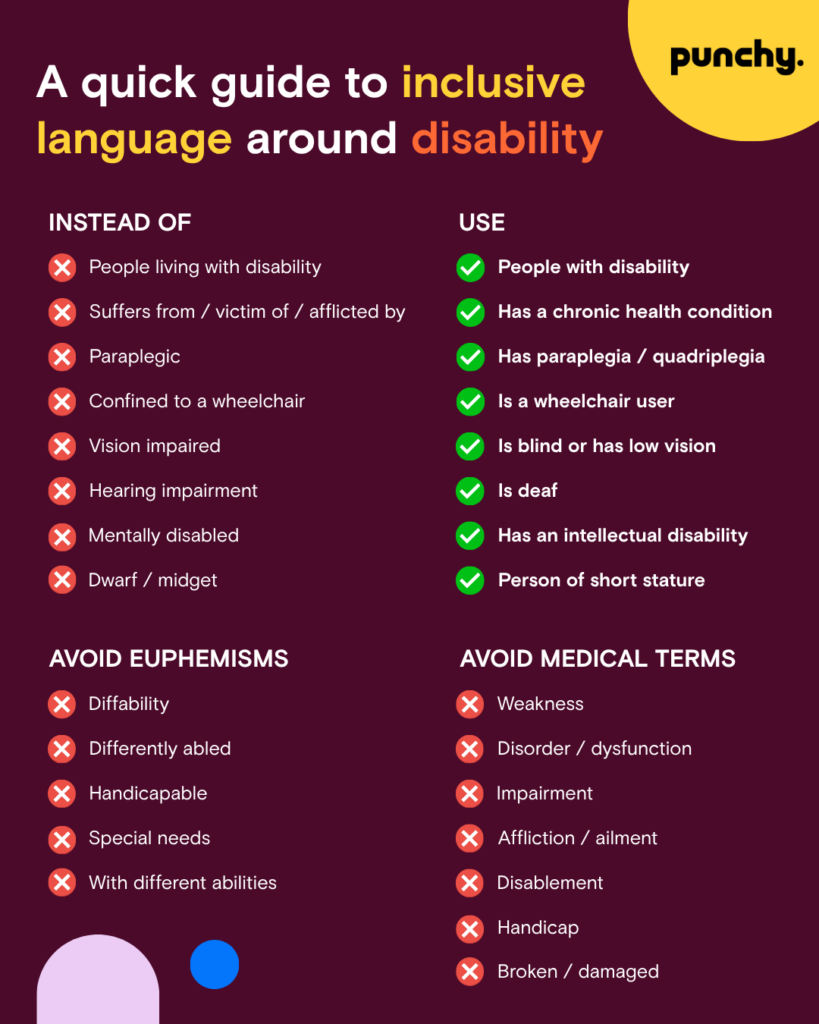
The script is also where language choices are made. The Inclusively Made framework draws a clear line between the medical model of disability, which frames disability as a problem inside the person to be fixed or pitied, and the social model, which treats disability as a mismatch between a person and their environment. In practice, this means the difference between describing someone as “suffering from a condition” versus “a person who has a condition”. It means writing a voiceover that describes barriers and environments rather than deficits and patients. For organisations in the health and aged care sector particularly, this is not a subtle distinction. The language a patient education video uses to describe a condition shapes how the viewer understands their own experience of it.
Audience analysis conducted before scripting begins is the most reliable way to surface these gaps. Who is currently missing from the way this audience is being represented? The answer to that question should drive the concept, not get bolted on at the end.
In casting
Authentic casting means casting people with disability in roles that involve disability. Not casting non-disabled actors to play disabled characters, a practice sometimes called “cripping up”, and not limiting disability representation to a single clearly labelled role in a production while the rest of the cast is uniformly non-disabled.
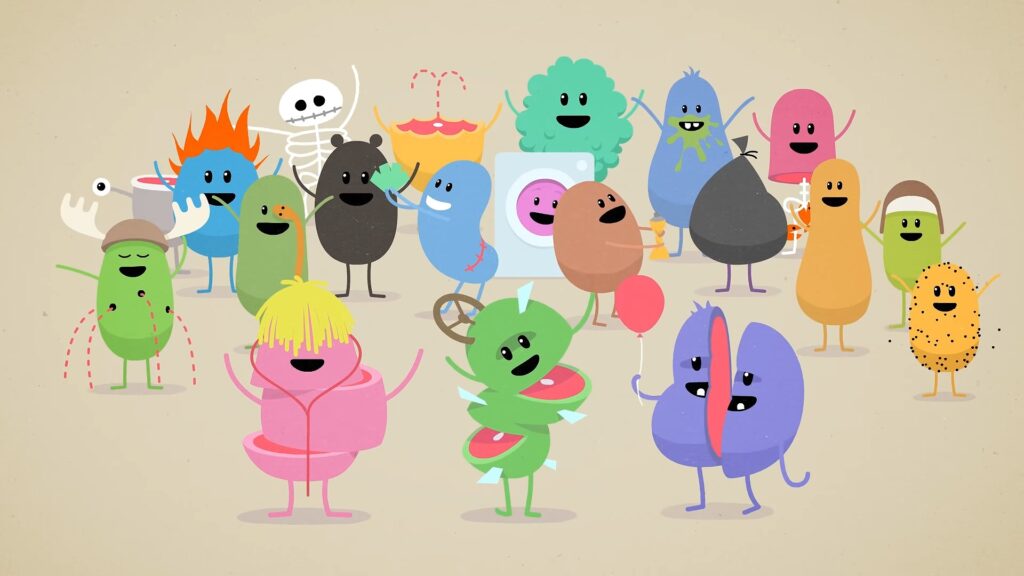
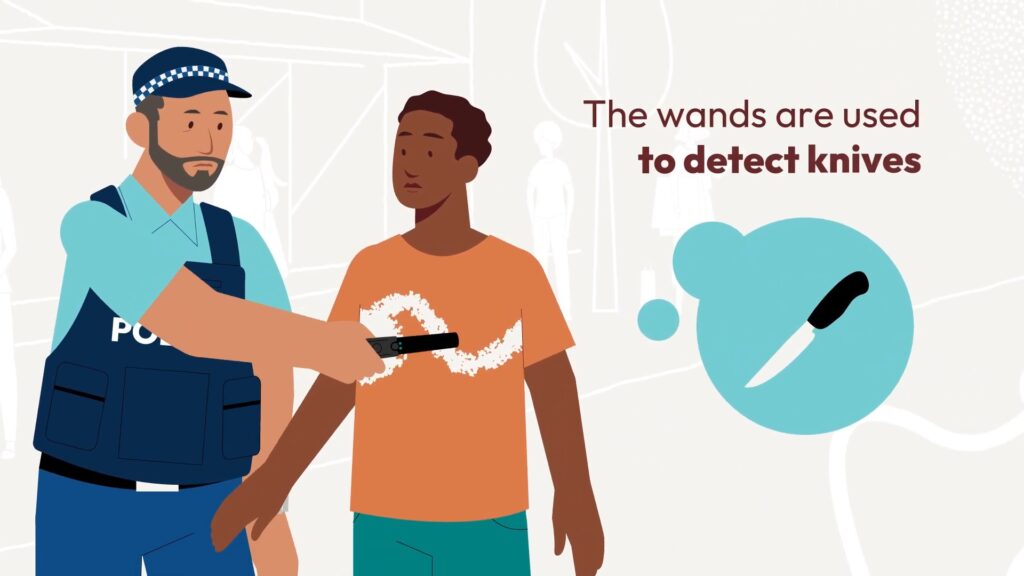
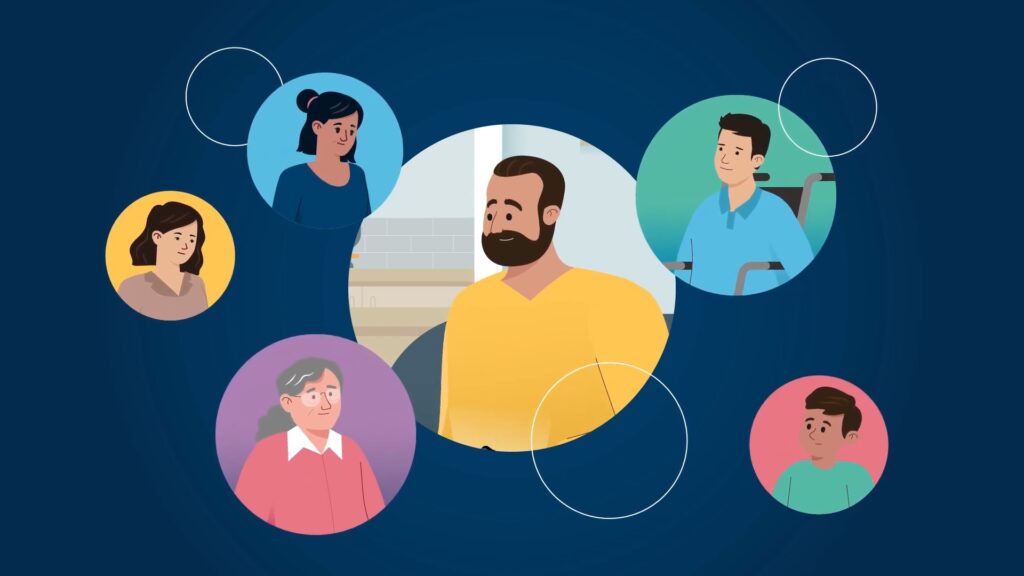
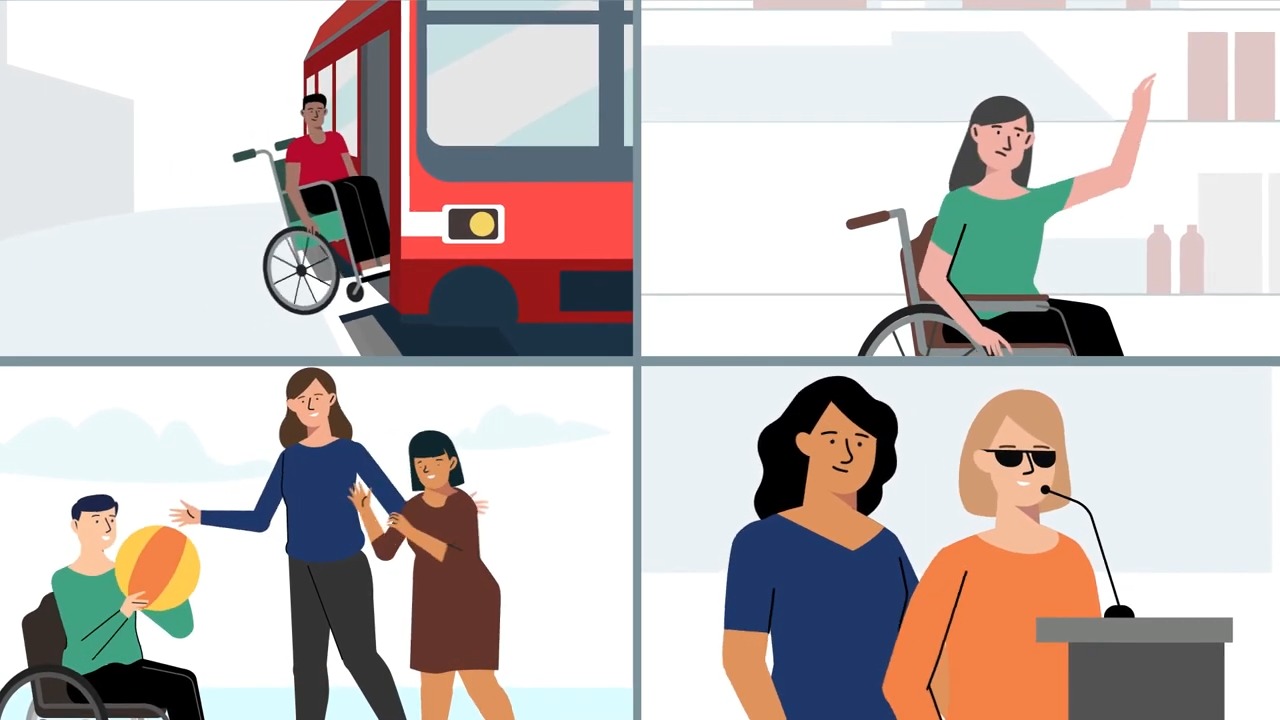
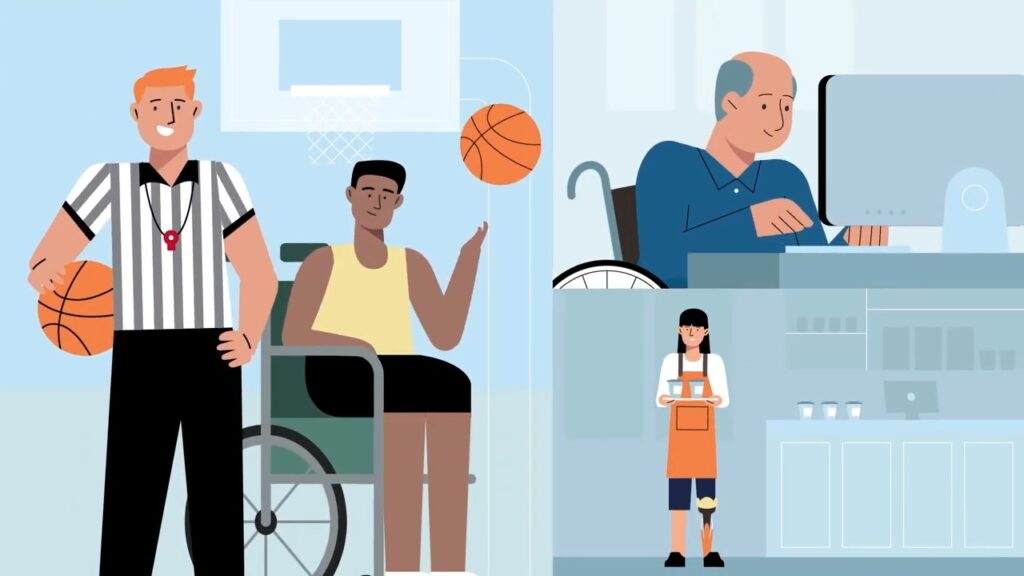
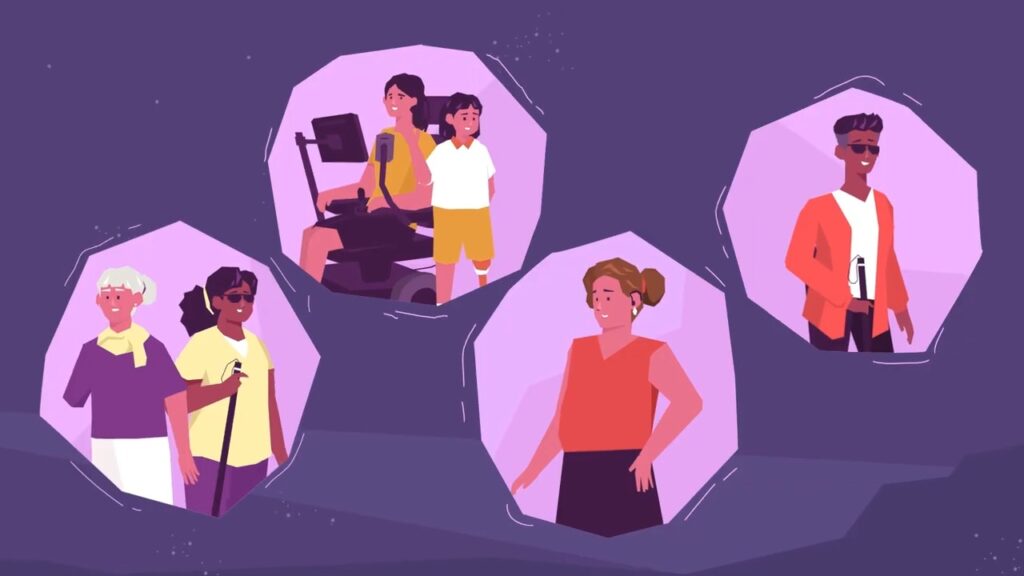
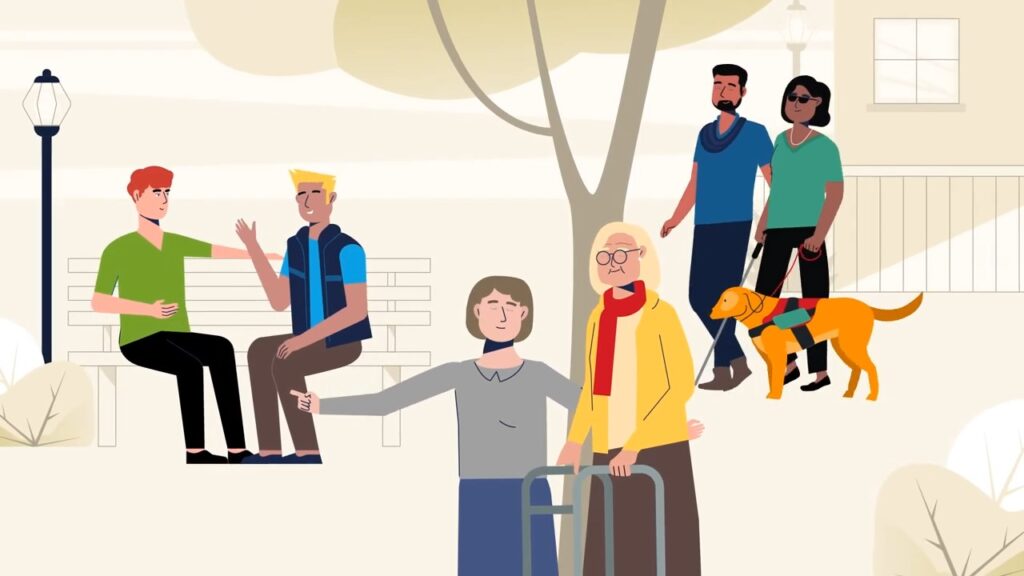
For animation and explainer video work, the equivalent decision sits in character design and voiceover casting. Animation gives a production team full control over how characters look, move, and are represented. Characters can use wheelchairs, hearing aids, prosthetics, and mobility aids as a natural part of the visual world of a video, without any additional cost or logistical complexity, because nothing needs to be filmed. The decision to include that representation is purely a design and scripting choice.
This matters particularly in sectors like higher education and local council, where communications are aimed at entire communities and the content is expected to reflect the actual diversity of those communities.
In delivery and accessibility
The eighth pillar, Accessible Broadcast, is where most productions begin and end their thinking on inclusion. The framework treats this as the minimum, not the ceiling.
Captions, audio description, transcripts, and Auslan interpreter cuts are the standard outputs of an inclusively made production. For organisations producing content for public deployment, particularly government agencies and peak bodies operating under accessibility obligations, these are not optional extras. The AIHW notes that people with disability in Australia face a persistent digital inclusion gap, and inaccessible media widens that gap rather than closing it.
For Punchy, the practical change here is treating captions, transcripts, and audio description as line items in the production budget from the first quote rather than add-ons negotiated at delivery. If the budget conversation happens at the end, these items tend to get cut. If they are in the brief from the start, they get built in.
The Gap in the Market
The Inclusion Imperative Report data points to a market reality that communications professionals in every sector should note: 19.4 million Australians are demanding accessible media, yet nearly half cannot name a single brand or organisation delivering it well. That gap is not closing on its own.
Among Gen Z Australians, over half say they would switch brands due to a lack of inclusive representation, and the same pattern holds among millennials. For organisations that communicate with young people, whether universities, government health agencies, or national charities, this is the cohort that is forming lasting impressions of institutional trustworthiness right now.
Over half of Australian audiences say authentic representation drives brand trust (56%) and purchase intent (53%).While “purchase intent” is a commercial measure, the underlying behaviour is broader. People are more likely to engage with organisations whose communications reflect their reality. In government and not-for-profit contexts, that engagement can translate into greater service uptake, stronger community confidence, more referrals, higher participation, and increased donations.
The competitive space is genuinely open. Brands doing this well, according to the report, are being rewarded with trust and recommendation. Organisations not doing it are leaving that trust on the table.
What This Means for a Video Brief
The practical upshot for anyone commissioning a video through Punchy is straightforward.
From the kick-off call, we enquire who is the audience for this video, and who is currently missing from how that audience is typically represented? That question drives the concept before the script is written. It surfaces representation gaps early, when they are cheap to address, rather than late, when they require reshoots or substantial script revisions.
For animation work, character design decisions are made at the storyboard stage with authentic representation as a default rather than an exception. For live action work, casting briefs are written to include people with disability as part of the spec, not as a separate disabled role carved out from the rest of the production.
Accessible delivery, captions, audio description, and transcripts, is in every production quote as standard. For productions where the audience and platform warrant it, an Auslan interpreter cut is offered as part of the delivery scope.
The Honest Version of the Argument
Inclusive production is the right thing to do. It is also, as the data makes clear, the commercially rational thing to do.
You are spending money producing content for an audience that includes, in every sector, a significant proportion of people with disability. If the content you produce does not reflect that reality, a portion of your intended audience will experience it as content that was not made for them. That affects comprehension, trust, uptake, and referral, the outcomes your content was supposed to produce.
Building inclusion into the brief does not require a larger budget. It requires a different set of questions at the start of the project. The questions are an integral part of how Punchy works.
If you are scoping a video production and want to talk through what inclusive production looks like for your specific brief, audience, and deployment context, get in touch to book a call.
Sources
- Inclusively Made, Bupa Australia, Atomic 212° (2026), The Inclusion Imperative Report. https://apo.org.au/node/333800
- Campaign Brief (2025), Half of young Aussies would switch to brands with better disability representation. https://campaignbrief.com/half-of-young-aussies-would-switch-to-brands-with-better-disability-representation-says-new-inclusion-imperative-report/
- B&T (2025), More Than Half Of Gen Z Aussies Switch Brands Due To Lack Of Disability Inclusion. https://www.bandt.com.au/more-than-half-of-gen-z-aussies-switch-brands-due-to-lack-of-disability-inclusion/
- Campaign Brief (2025), Major brands join Inclusively Made to drive better disability representation in marketing. https://campaignbrief.com/major-brands-join-inclusively-made-to-drive-better-disability-representation-in-marketing-thinkerbell-crowned-inclusive-agency-of-the-year/
- Australian Human Rights Commission (2025), Disability rights statistics in Australia. https://humanrights.gov.au/human-rights-education/stats-and-facts-about-discrimination/statistics-about-disability-rights-0
- Australian Institute of Health and Welfare (2025), Australia’s Disability Strategy 2021–2031 Outcomes Framework: 3rd annual report, Information and communication systems accessibility. https://www.aihw.gov.au/reports/australias-disability-strategy/australias-disability-strategy-outcomes-framework/contents/inclusive-homes-and-communities/information-and-communication-systems-accessibilit