Most video projects that run over budget, miss their deadline, or land with the wrong tone have one thing in common: a brief that was not clear enough at the start. For NFP health organisations, where budgets are tight, stakeholder sign-off is slow, and the audience is often vulnerable, a poorly scoped project is not just frustrating. It is a real risk to impact.
The good news is that a well-structured brief is not complicated. It does not require specialist knowledge of video production. It requires clarity about your audience, your goal, and the context the video will live in. Most organisations already have this information somewhere. The challenge is pulling it together in a form that a production partner can actually use.
Start With the Audience, Not the Format
The most common briefing mistake is leading with format. “We want an animated explainer” or “We need a testimonial video” are format decisions, not briefs. Format should follow from a clear understanding of who the audience is and what they need to feel, think, or do after watching.
For a health NFP, this means being specific about the population the video is designed to reach. Is the audience people newly diagnosed with a chronic condition? Carers of someone experiencing a mental health crisis? Health professionals who need to understand a new referral pathway? Each of these audiences has different literacy levels, different emotional contexts, and different needs when it comes to trust and tone.
A brief that names the audience precisely gives a production team the foundation they need to make good decisions about format, pacing, language level, and visual approach. Without it, every creative decision becomes a guess.
Define the One Thing You Want the Viewer to Do
Health communications often carry a lot of information. Services, eligibility criteria, referral steps, risk factors, support options: the temptation is to include everything in one video because the budget only allows for one video. This is understandable but it produces content that does not work.
A strong brief identifies the single most important action or understanding you want the viewer to take away. Not the three most important things. One.
This constraint forces clarity. It reveals whether the brief is really about awareness, behaviour change, service uptake, or internal training. Each of those goals points toward different content structures, different lengths, and different calls to action. Trying to do all of them at once produces a video that achieves none of them well.
If you genuinely need to cover multiple objectives, a brief that acknowledges this upfront allows a production team to propose a modular approach, a series of shorter videos, or a primary and secondary asset strategy. That is a better outcome than a single overloaded video.
Describe the Approval Environment Honestly
Health NFPs typically have complex approval structures. Content may need to pass through a clinical team, a communications manager, a CEO, a board, or a government funder before it can be finalised. Some organisations also work with community advisory groups or lived-experience panels whose feedback carries weight.
A brief that does not account for this sets up unrealistic timelines and creates tension mid-project. A production team building a schedule needs to know how many review rounds are expected, who has sign-off authority at each stage, and whether any reviewers are likely to require significant changes late in the process.
This is not about slowing things down. It is about building a realistic schedule that protects the budget and keeps the relationship functional. Projects that run into unexpected stakeholder feedback at the animation or filming stage are significantly more expensive to fix than projects where that feedback is captured at the script stage.
Be Specific About Accessibility Requirements
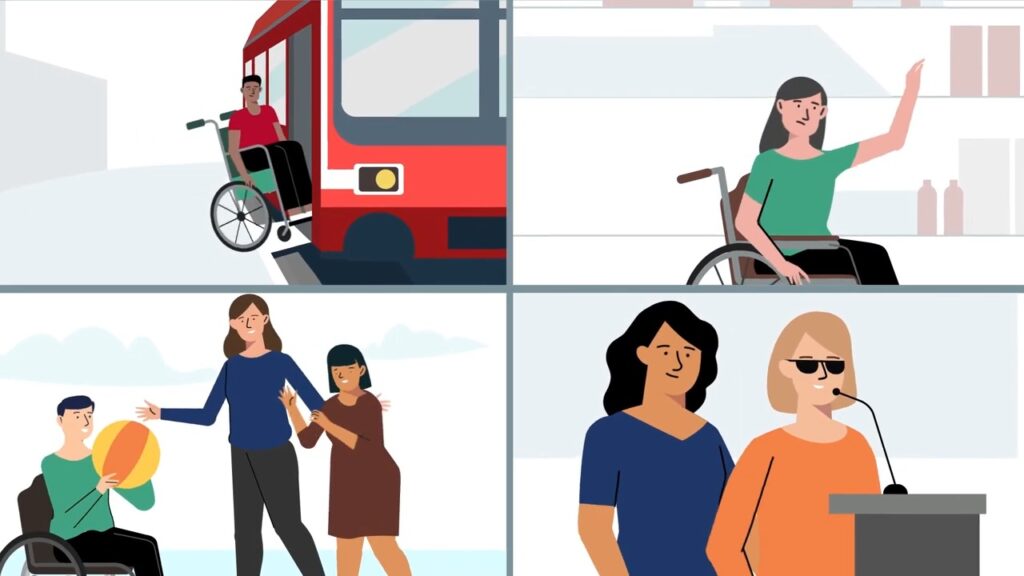
Health content for public audiences in Australia should, as a baseline, meet WCAG accessibility standards. This means considering captions, transcripts, and audio description for key visual information. For organisations working with culturally and linguistically diverse communities, translated versions or multilingual voiceover may also be required.
Many NFP health organisations need Auslan interpretation for certain content, particularly anything involving public health campaigns, rights information, or community-facing communications. If any of these requirements apply, they should be in the brief from the beginning. Retrofitting accessibility onto a finished video is always more expensive and often less effective than designing for it from the start.
Include the channels where the video will be used. Social media, LMS platforms, websites, community events, and clinical waiting rooms each have different technical requirements. A production partner who knows where the video will live can deliver the right file formats, aspect ratios, and caption formats without additional rounds of work.
Include What You Have Already
Many health NFPs have existing materials that a production team can draw on: annual reports, strategic plans, consumer-facing brochures, clinical guidelines, or previous communications audits. Including these in a brief does two things. It saves time because the production team does not have to rediscover information your organisation already holds. And it ensures accuracy because content is built on approved source material rather than a team’s interpretation of a brief alone.
If you have brand guidelines, include them. If you have a preferred tone of voice, describe it. If there are things that previous communications have got wrong about your audience or your services, flag them. A good production partner will use all of it.
What You Do Not Need
A strong brief does not require a script, a storyboard, or a detailed creative concept. It does not require you to know whether you want animation or live action. It does not require you to know what the video will look like.
What it requires is clarity about audience, goal, context, constraints, and approvals. Everything else, including format, can be worked through collaboratively once those foundations are in place.
If you are working on a video project and you want to understand what the production process looks like from brief to delivery, our live action services page and our portfolio give a sense of how we approach different health and community contexts.
Get the Foundation Right
A good brief is the most important investment you can make before a video project begins. It protects your budget, shortens your timeline, and significantly improves the likelihood that the final product works for the audience it is designed to serve.
If you are not sure where to start, or if you have a brief that feels incomplete, reach out to the Punchy team for a no-pressure conversation. We work with NFP health organisations at every stage of the briefing process, from early scoping through to final delivery. You can also explore our portfolio to see the types of health and community communications we have worked on across Australia.