Public sector communications is at a crossroads.
The pressures have never been greater. You’re expected to raise awareness, change behaviour, engage hard-to-reach communities, combat misinformation, and prove ROI, all while working with stretched budgets and shrinking timelines.
The tools, channels, and strategies that worked five years ago aren’t cutting it anymore. Social media algorithms have shifted. Audiences are fragmented. Misinformation spreads faster than facts. And the bar for what counts as effective communication has been raised from awareness to measurable behaviour change.
We surveyed 100+ public sector communications professionals across Australia to find out what they’re prioritising, which channels they’re using, what’s actually working, and how new technologies like AI and video are reshaping the landscape.
Let’s dive in.
Download the full report as a PDF here
Section 1: Understanding What Drives Government Communicators
We asked public sector communications professionals across Australia what matters most in their work.
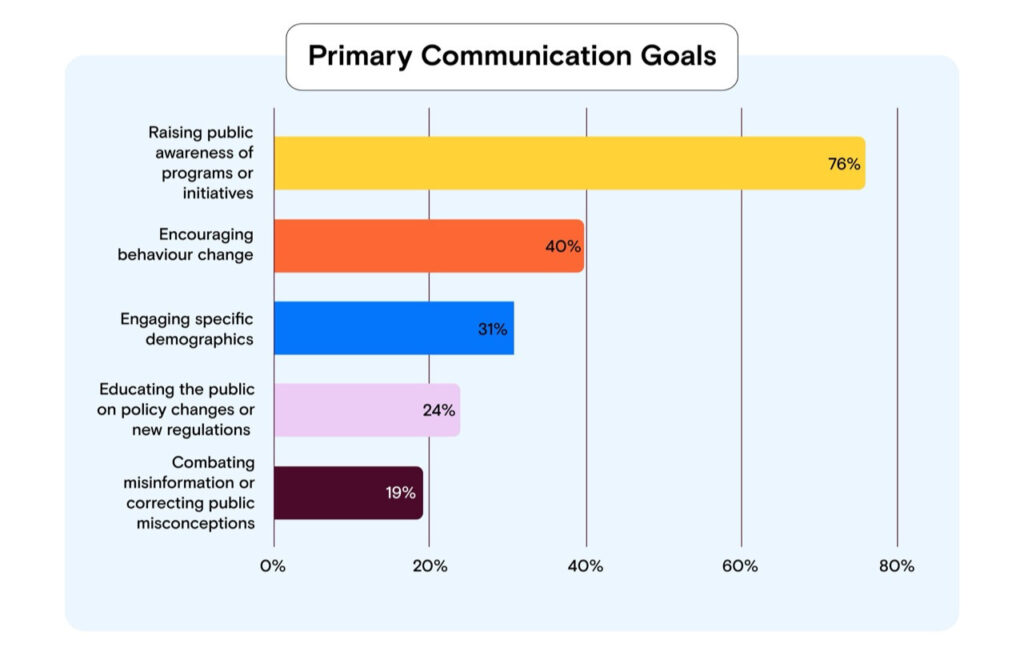
- Raising public awareness topped the list at 76%. No surprises there.
- Encouraging behaviour change came in second at 40%. Not just informing anymore, but changing how people act.
- Engaging specific demographics (31%) outranked general policy education (24%). Targeted beats broad.
- Combating misinformation rounded out the top five at 19%. A few years ago, this wouldn’t have made the list.
What This Means
From Broadcasters to Behaviour Designers
That 40% figure for behaviour change is a job description rewrite. Modern government communicators need to understand psychology, not just media relations. You’re being asked to influence how people recycle, manage their health, comply with regulations. Catchy slogans won’t cut it anymore. You need evidence-based strategies and the ability to measure real-world impact.
The Death of One-Size-Fits-All
When specific demographic engagement outranks general policy education, that tells you something important: generic messaging is failing. The most vulnerable groups (like CALD communities) simply don’t respond to broad-brush approaches. This explains why you’re being asked for more content, in more languages, across more channels. A single press release doesn’t reach a fragmented public anymore.
Defence Is the New Offence
Combating misinformation in the top five? That’s new for most departments. You’re no longer just telling your story, you’re protecting truth against competing narratives that often spread faster than facts. This means social listening, rapid response capabilities, and the tricky art of debunking without amplifying. In today’s digital environment, slow equals losing control of the narrative.
Section 2: Where Communicators Are Investing (And Whether It’s Working)
Not all channels are created equal. We asked respondents which channels they use most, how effective those channels actually are, and what makes each one work (or fail).
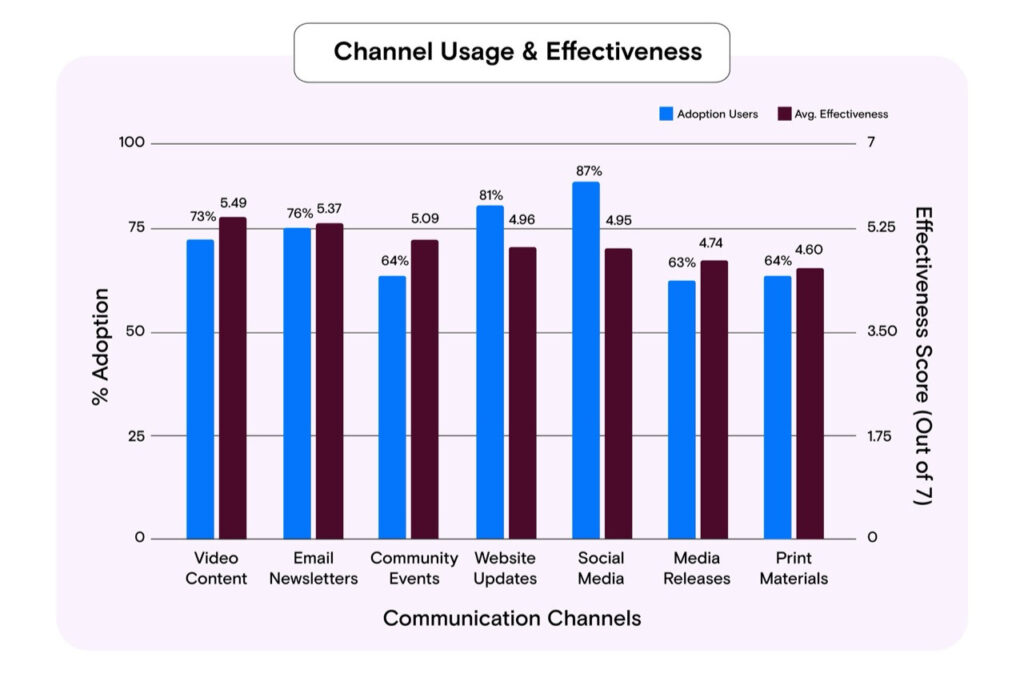
- Social media leads in usage (87%) but ranks fifth in effectiveness (4.95).
- Video content comes fourth in usage (73%) but tops effectiveness scores (5.49).
- Email newsletters rank third for usage (76%) with the second-highest effectiveness rating (5.37).
- Community events sit at fifth for usage (64%) but score third for effectiveness (5.09).
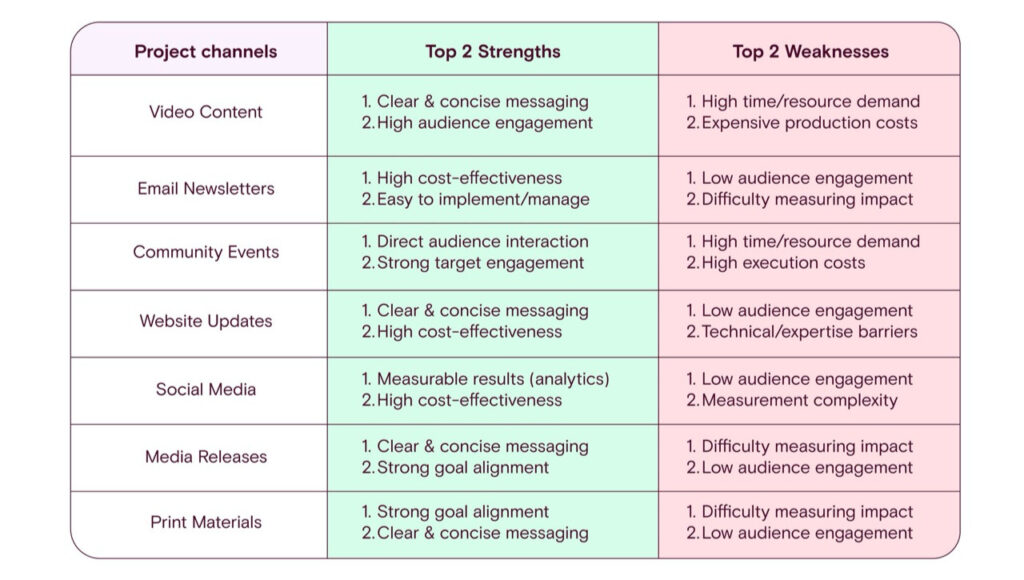
- Clear and concise messaging emerged as the number one strength for video, print, media releases, and website updates.
- High cost-effectiveness was a top strength for email newsletters, website updates, and social media.
- Almost every channel shared a common weakness: low audience engagement or difficulty measuring impact.
- The channels with the highest engagement (video and events) are also the most expensive and time-consuming.
What This Means
The Social Media Paradox
Social media ranks first in usage (87%) but only fifth in effectiveness (4.95). Many departments are stuck in a high-effort, low-return loop, treating social as a default channel because it’s easy to post, but the data suggests it’s actually difficult to achieve meaningful results there. Think of social media as a top-of-funnel awareness tool rather than a primary driver of deep engagement.
The Resilience of Owned Audiences
Email newsletters (5.37) significantly outperform social media (4.95) in effectiveness. With ever changing algorithms, owning your audience is more valuable than renting one. Focus on growing subscriber lists and insulating yourself from social media volatility.
The Trust Factor of Physical Presence
Community events scored higher (5.09) than almost all digital-only channels except video and email. High-tech doesn’t always mean high-impact. For sensitive topics, physical presence and community events remain essential. Digital channels should support community engagement, not replace it.
The Measurement Blind Spot
For almost every channel except social media, “difficulty measuring impact” was cited as a top weakness. While it’s easy to count clicks or attendance, connecting those to actual behaviour change remains the holy grail of public sector communications. Invest in robust measurement CRM systems or survey-based attribution to bridge this gap.
Video’s Efficiency Gap
Video ranks fourth in usage (73%), largely because of budget and time barriers. But it’s the clear winner in effectiveness (5.49). This reveals a resource trap: communications teams are forced to use less effective channels because they lack the capacity for high-impact work.
The takeaway is straightforward: shifting budget from high-frequency social posting toward fewer, higher-quality videos will yield a better ROI. The strategic recommendation for leadership is to prioritise production resources over distribution volume.
Section 3: How Communicators Track Success (And How Confident They Feel About It)
We asked what metrics departments use and how confident they feel about proving impact.
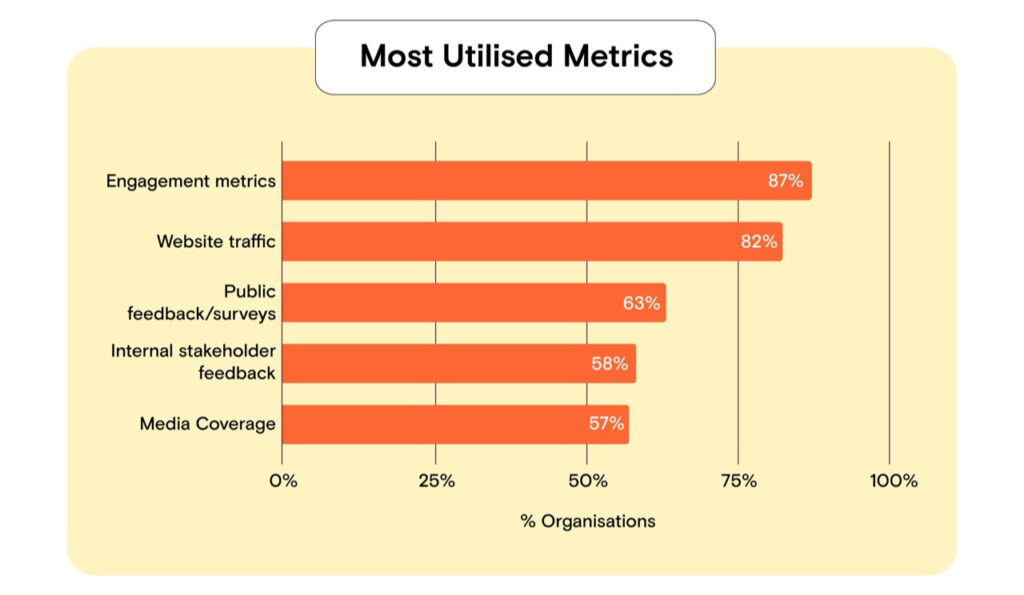
Engagement metrics (views, likes, shares) dominate at 87% adoption, followed by website traffic at 82%. Public feedback and surveys come in third at 63%, with internal stakeholder feedback at 58% and media coverage at 57%.
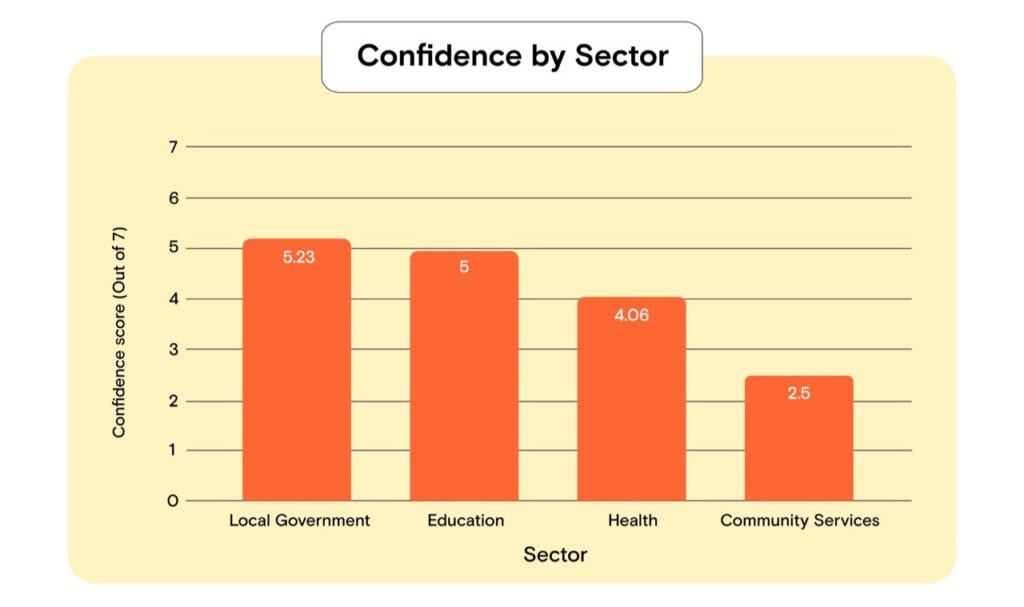
The industry average for measurement confidence stands at 4.75 out of 7 (roughly 68% confidence). But this masks a stark measurement divide between sectors. Local Government leads at 5.23, Education follows at 5.00, Health sits at 4.06, and Community Services trails at 2.50.
What This Means
The Vanity Metric Comfort Zone
The dominance of engagement metrics (87%) and website traffic (82%) suggests that many departments are measuring output rather than outcome. It’s far easier to track a like than it is to track a behaviour change. The high adoption of digital metrics explains the relatively high confidence scores (4.75), but the challenge is to move deeper. Complement digital data with public surveys to validate if those digital views actually led to real-world awareness.
Sector-Specific Measurement Barriers
The gap between Local Government (5.23) and Community Services (2.50) is significant. This isn’t necessarily a lack of skill in Community Services, but likely a lack of infrastructure. Local government often has unified platforms for rates, registrations, and inquiries that provide clear data. Community Services often deal with anonymous or hard-to-reach groups. If you’re in a low-confidence sector, stop trying to build complex digital metrics to prove value. Use accessible qualitative micro-surveys or direct community feedback.
The Risk of Internal Validation
With internal stakeholder feedback (58%) being used more than media coverage (57%), there’s a trend toward internalised success. If your boss is happy, you feel confident. However, internal satisfaction is a subjective metric. For a more robust measurement framework, balance this internal sentiment with objective, external data points to avoid an echo chamber effect.
The Correlation of Complexity
Our analysis found a positive correlation (0.43) between the number of different metrics used and the confidence of the respondent. Confidence comes from triangulation. The professionals who feel best about their impact are those who don’t rely on a single report. They look at social media, web traffic, and surveys together to form a complete story. Build a multi-source dashboard to increase your measurement certainty.
Section 4: The Medium Everyone Wants But Few Can Fully Exploit
Video emerged as the most effective channel in our survey, yet adoption remains patchy and barriers persist.
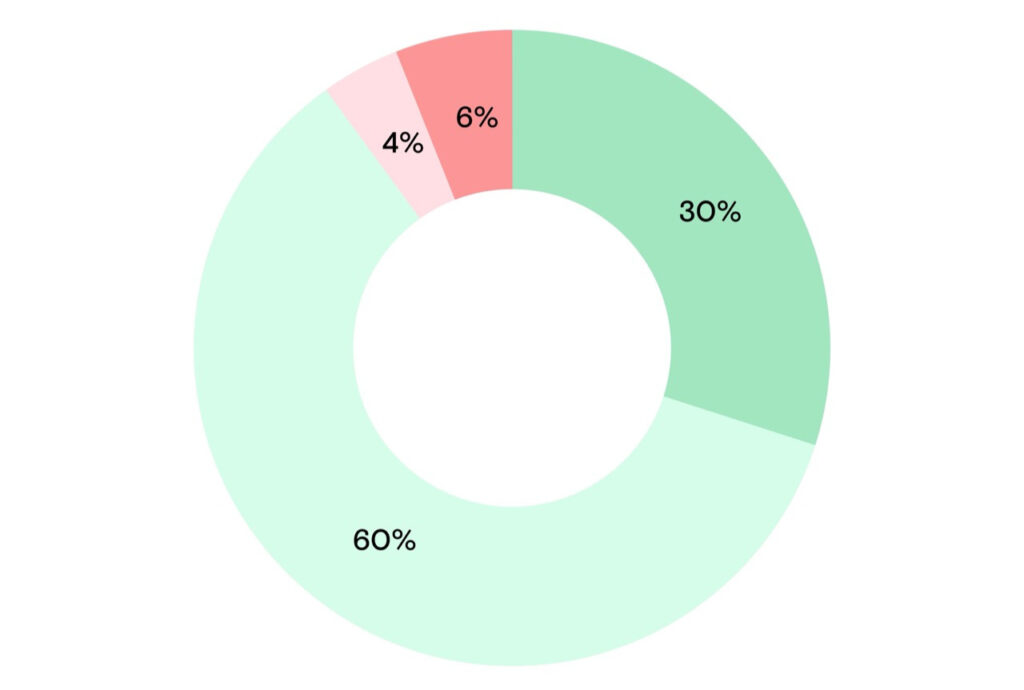
Video adoption is now near-universal: 90% of respondents already use video, with only 6% of the industry having no plans to integrate it. However, there’s a significant frequency gap: while 30% of departments have managed to make video a frequent, core part of their strategy, the remaining 60% are occasional users.
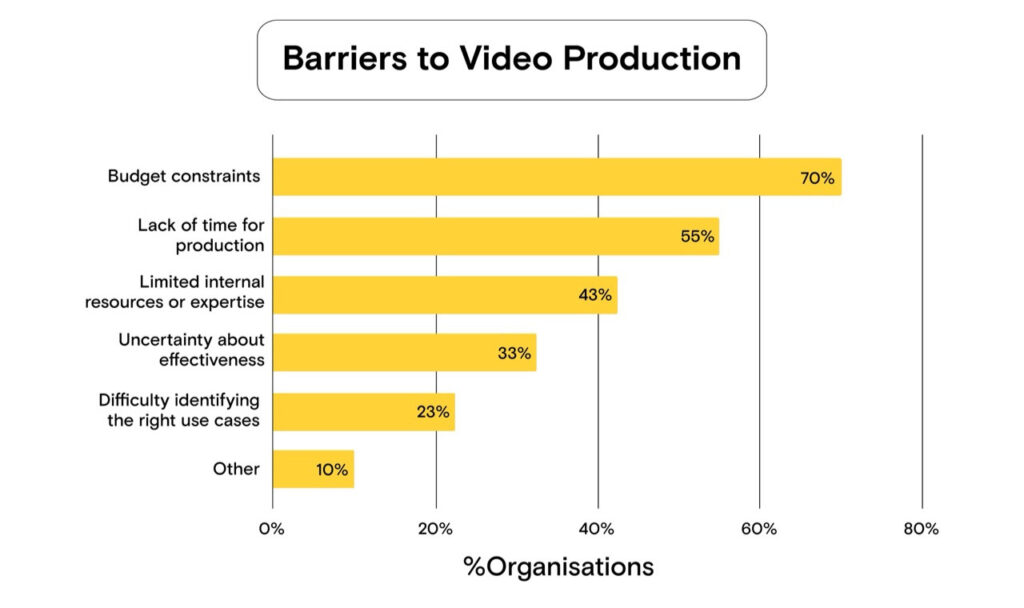
The barriers are structural:
- 70% cite budget constraints
- 55% lack time for production
- 42.5% have limited internal resources or expertise
- 32.5% are uncertain about effectiveness
What This Means
The Funding Gap
An overwhelming 70% of respondents who are inhibited from using more video cite budget as the primary constraint. This is no longer just a top concern, it’s a structural blockade. The industry is currently in a state of unmet demand. Organisations recognise the value of the tool, but the current financial models for public sector communications haven’t evolved to treat video as a baseline necessity.
The Time vs Quality Trap
Over half (55%) of respondents simply don’t have the time to produce video. This is the most actionable insight. It suggests that the barrier isn’t necessarily “I can’t do it” but “I can’t do it fast enough.” To bridge this gap, departments shouldn’t just ask for more money; they should ask for process-efficiency tools (like automated captioning, AI editing, or templates) that cut the production clock in half.
High Strategic Buy-In
Even among those facing challenges, only 32.5% have doubts about the effectiveness of video. This is a green light for leadership. Usually, “uncertainty about effectiveness” is a major reason for not adopting a new tool. Here, it’s a minority concern. The internal sell of video has already been won, but the remaining struggle is purely one of operational logistics (time, money, and skill).
The Expertise Deficit
Nearly half of the respondents lack the internal expertise to execute video projects. This represents a significant up-skilling opportunity. Because budget is tight, outsourcing is often too expensive. The solution lies in training existing generalist communications officers in specialist video storytelling. This directly addresses the budget, time, and resource barriers in one move.
Why Video Actually Works
Respondents didn’t just say video works, they also identified why it outperforms text and static imagery:
Cognitive Load Reduction
Video is cited as the premier tool for “Complexity Management.” By combining audio and visual cues, it breaks down policy changes or health regulations into easy-to-understand concepts that text-heavy documents cannot match.
The Relatability Factor
In a sector often criticised for being faceless, video adds a human element. Respondents noted that visuals allow the public to relate to the content, building trust through personal storytelling.
Algorithmic Dominance
Beyond the human element, there’s a technical advantage. Professional communicators recognise that social media algorithms prioritise video, providing a greater reach multiplier that effectively lowers the cost-per-impression compared to static posts.
Section 5: Our Video Advice
Based on the survey findings, here are four actionable strategies to help departments move from occasional video use to strategic, high-impact deployment.
1. Bridge the “Frequency Gap” with Lo-Fi Content
The industry is currently over-indexing on high-gloss production which limits frequency. To move from occasional to frequent, departments should adopt a two-tier video strategy. Use high-production agencies for hero brand films, but empower internal staff with smartphone-based tools for fast video: interviews, event highlights, and quick updates. This lowers the budget and time barriers simultaneously.
2. Prioritise “Outcome” Over “Output”
Because budget is the number one barrier, communicators must justify the spend by shifting metrics. Stop reporting on video views (output) and start reporting on action metrics (outcome). If a 60-second video explains a policy change so well that it reduces call-centre inquiries by 15%, the budget constraint becomes an investment opportunity. For example, our video campaign for Lung Foundation led to over 17,000+ clicks to Quitline services.
3. Invest in Storytelling, Not Just Software
Buying expensive editing software won’t solve the expertise gap. The real barrier is often storyboarding and scripting. A well-told story shot on an iPhone is more effective than a poorly-told story shot on a cinema camera. Departments should prioritise training in visual communications to ensure that when they do spend time on video, the messaging is optimised for the 10-second attention span of the modern watcher.
4. The “Demographic Engagement” Opportunity
Video is the ultimate tool for inclusivity. For CALD (Culturally and Linguistically Diverse) communities or low-literacy groups, video bypasses language barriers through visual demonstration. Departments should leverage video specifically for these hard-to-reach groups where traditional text-based communication consistently fails.
Section 6: How Government Communicators See AI Reshaping Their Work
We asked how communicators expect AI to impact their work and what role they see it playing in their teams.
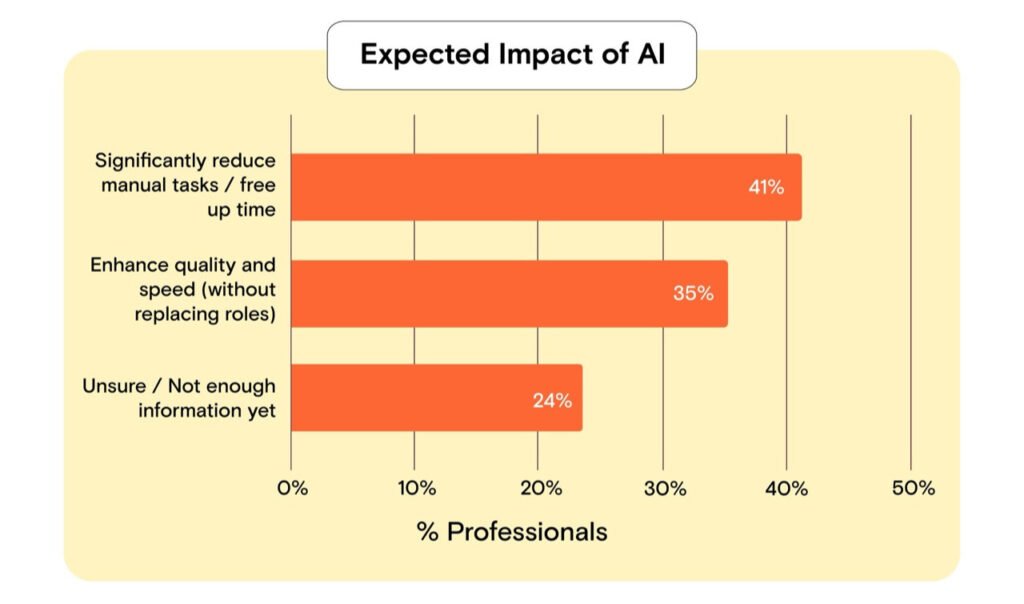
The Overall Picture: 41.2% expect AI to significantly reduce manual tasks and free up time, while 35.3% believe it will enhance quality and speed without replacing roles. However, 23.5% remain unsure or feel they don’t have enough information yet.
Different sectors are at very different stages of the “AI Journey”:
- The Optimists (Local Government): 75% expect AI to significantly reduce their manual workload, viewing it as a primary solution to the resource gap.
- The Enhancers (Health): 65% view AI as a tool for quality and speed in a high-accuracy field like health, AI is viewed as a supportive editor rather than an automated replacer.
- The Cautious (Education & Community Services): These sectors hold the highest levels of uncertainty, representing 75% of the “Unsure” responses, highlighting a need for sector-specific AI training.
What This Means
The Bandwidth Revolution
Over 76% of the group sees AI as a boost to speed or a reducer of manual tasks. For the public sector, the greatest value of AI is not creative replacement but administrative relief. If AI can handle the first draft of a media release or the first cut of a video, it effectively solves the number one industry problem: lack of time. Departments should focus AI implementation on “bottleneck” tasks rather than creative ones.
Tackling the Uncertainty
Even in this forward-looking group, nearly a quarter are unsure. Uncertainty in the public sector usually relates to governance and ethics. To move the “Unsure” group into the “Productive” group, organisations must provide clear AI frameworks that address data privacy. The leadership challenge is that adoption can’t just be about technology.
AI as the Video Content Catalyst
A critical insight emerges when cross-referencing this section with the video data: AI was explicitly mentioned as a tool that would encourage more video usage. Since the top barriers to video are “Time” (55%) and “Expertise” (42.5%), these respondents are looking to AI to bridge that gap. For these users, AI can be the engine that will finally make high-frequency video production possible.
AI for Hard-to-Reach Engagement
“Demographic Engagement” is a primary goal for these communicators. AI’s most potent public sector application is accessibility. AI-driven translation, automated alt-text for imagery, and simplified Easy English summaries of complex policy can help meet their inclusivity goals without needing extra headcount. AI is the only tool that can scale personalised communication on a fixed budget.
What Now? Turning Insights Into Action
The future of public sector communications belongs to those who prioritise quality over quantity, outcomes over outputs, and production resources over distribution volume.
That means fewer social posts and more video. Owned audiences over rented ones. Measurement systems that connect activity to behaviour change. AI that frees up bandwidth for high-impact work. And recognising that the channels with the highest engagement are worth the investment, even when they’re resource-intensive.
But knowing what to do and actually doing it are two different things.
Book a strategy session with Punchy Studio and let’s turn these insights into your next steps.