The Content Is Done. Now What?
Government communications teams spend significant time and resource producing content. Video productions, animated explainers, infographics, social assets, campaign materials. The creative work is rigorous. Approvals are thorough. Production quality is high. And then the content goes out, and almost nobody can tell you whether it actually reached the intended audience.
This is not a content quality problem. It is a distribution problem. And for government comms managers working under pressure to demonstrate measurable outcomes, it is one of the most overlooked gaps in the communications planning process.
A distribution strategy is not a logistics checklist. It is a deliberate plan for how each piece of content, including your video and animation assets, will reach specific audience segments through the right channels at the right time. Without it, even the best-produced video content will underperform.
Why Government Communications Teams Skip Distribution Planning
It is worth being direct about why this happens. Government communications workflows tend to concentrate effort on content creation and approval. The budget, the stakeholders, the sign-off cycles: all of it is oriented around getting the content made and cleared. By the time a video or animation is finalised, the energy in the team has been largely spent.
There is also a structural issue. In many agencies, the team that produces content is not the same team responsible for digital channels, community engagement, or media. Distribution ends up being someone else’s problem, and coordination across those functions is inconsistent.
The result is that government agencies invest in high-quality video and animation production, and then publish that content in ways that are passive, siloed, or poorly targeted. A video appears on the agency website. It gets posted to a social channel once. It might be included in an email newsletter. And then it sits.
What a Distribution Strategy for Video Actually Involves
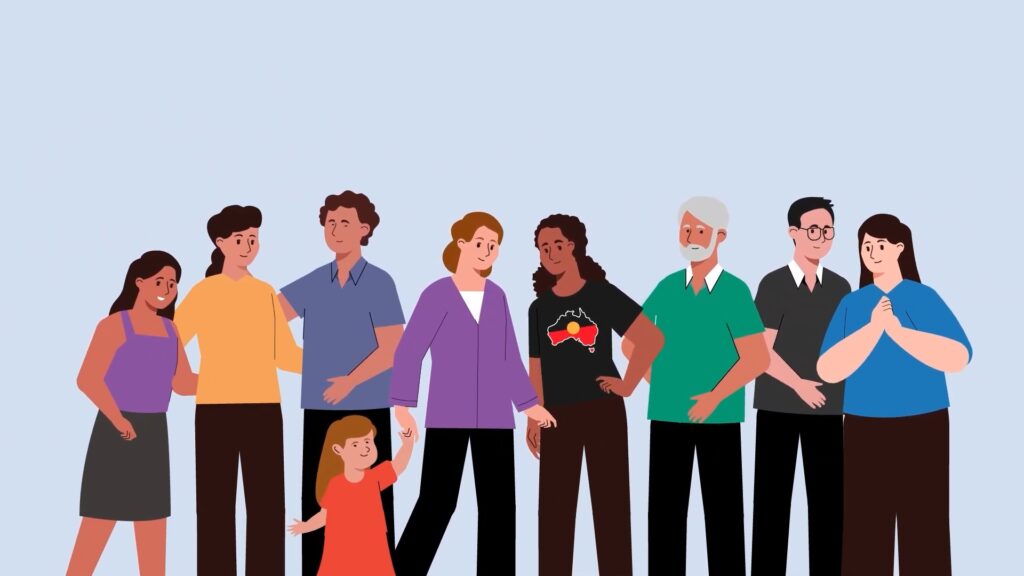
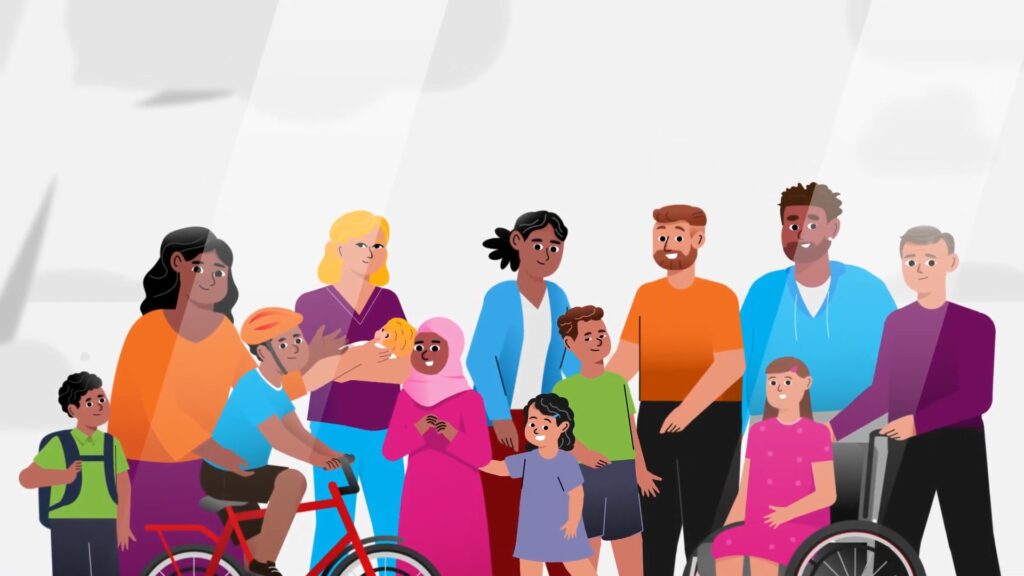
A distribution strategy starts with audience mapping. Who exactly needs to receive this message? Not “the general public” as a default, but the specific community segments, stakeholder groups, or demographics the content is designed to reach. Government agencies often serve highly diverse audiences with different language needs, different levels of digital access, and different trusted information sources. Your video or animation asset needs to find those audiences where they actually are.
From there, distribution planning involves channel selection: which platforms and formats reach each audience segment most effectively. For animated explainer content, this might mean short-form social cuts for community Facebook groups, a full version embedded in a targeted email to service providers, a version with captioning and translated subtitles for multicultural communities, and a version formatted for display in a community service waiting room.
One video. Multiple distribution pathways. Each one deliberate.
The Connection Between Distribution and Measurable Impact
Government communications managers are under consistent pressure to report on campaign impact. The honest reality is that measuring “awareness” is genuinely difficult when content is distributed passively. If you cannot track who saw your video, in what context, and whether it prompted any action, you cannot make a meaningful claim about its effectiveness.
A distribution strategy changes this. When you distribute video content through specific channels with specific audience targets, you generate actual data. Watch completions. Click-through rates. Service enquiry uplift. Community engagement metrics. These are the numbers that tell a real story about whether a campaign worked, and they are the numbers that give government communicators credibility in internal reporting and budget conversations.
This matters particularly for state government communications teams, where program funding is tied to demonstrable outcomes and community impact. A well-distributed video campaign with documented reach and engagement metrics is a far stronger piece of evidence than a video that was published and left to fend for itself.
Animation Assets Are Especially Well-Suited to Multi-Channel Distribution
One of the practical advantages of animation for government communications is how readily it can be adapted for different distribution contexts. An animated explainer can be cut down to a 15-second social version without losing its core message. It can be translated and subtitled for CALD communities. It can be stripped of voice-over and given text overlays for silent autoplay environments. It can be reformatted for vertical display on mobile or horizontal display for digital signage.
This flexibility makes animation a particularly strong investment for agencies communicating with diverse communities. Rather than producing separate assets for each audience segment, a well-planned animation project produces one core asset that can be adapted across multiple distribution pathways, each targeted to a specific community.
The key is planning those distribution pathways before production begins, not as an afterthought once the content is finalised. When distribution is part of the brief from the start, the creative is built to support it.
Integrating Distribution Into Your Communications Planning Process
For government comms managers who want to close the gap between content production and content impact, the most practical starting point is to add a distribution planning stage to every communications brief. Before any production begins, answer three questions: Who specifically needs to receive this content? Where do they actually consume information? And how will we track whether the content reached them?
A content strategy framework that integrates distribution from the outset looks very different from one that treats distribution as a post-production task. It shapes the creative brief, informs the production scope, and gives the communications team a clear picture of what success looks like before a single frame is produced.
It also makes the case for investment in high-quality video and animation much easier. When you can demonstrate that a video asset will be distributed across six distinct channels, reaching three separate audience segments with tailored versions of the content, the production investment looks very different from a video that will be posted once and forgotten.
Your Video Content Deserves an Audience
If your team is producing video and animation content that is not generating the engagement or impact you expected, distribution strategy is almost certainly part of the answer. The content may be excellent. The problem is that it is not finding the people it was made for.
Building a distribution strategy does not have to be complicated. It requires clear thinking about audiences, channels, and measurement before production begins. And it requires treating distribution as a creative and strategic discipline, not an administrative afterthought.
The Punchy Studio team works with government agencies across Australia to plan and produce video and animation content that is built for distribution from day one. Get in touch to talk through your next campaign, or explore our portfolio to see how government teams have used strategic video content to reach the communities that matter most.