The Enrolment Market Has Changed. The Marketing Hasn’t Always Caught Up.
Prospective students in Australia are making enrolment decisions in an environment saturated with institutional marketing. Every university, TAFE, and vocational training provider is competing for the same attention across the same digital channels with broadly similar messages about outcomes, campus life, and career pathways. The content looks alike. The claims are familiar. The differentiation, for many institutions, is harder to find with each passing year.
At the same time, the expectations of prospective students have shifted significantly. Audiences who have grown up consuming short-form video, interactive content, and visually rich media on their phones do not slow down for dense written content, static images, or institutional language. They make quick assessments about whether something is worth their attention, and they move on. Education marketing teams are working harder than ever to produce the volume of content that digital channels demand, while the quality threshold for cutting through keeps rising.
This is the context in which many education marketing and communications managers are turning to animation as a deliberate enrolment campaign strategy, not as a production choice, but as a communications one.
Why Animation Works Differently From Other Education Marketing Formats
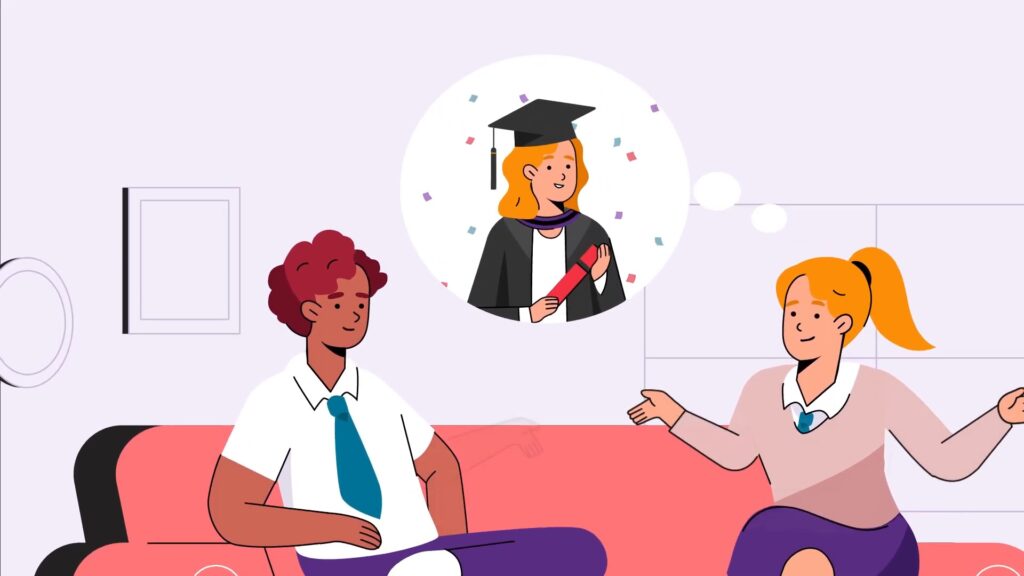
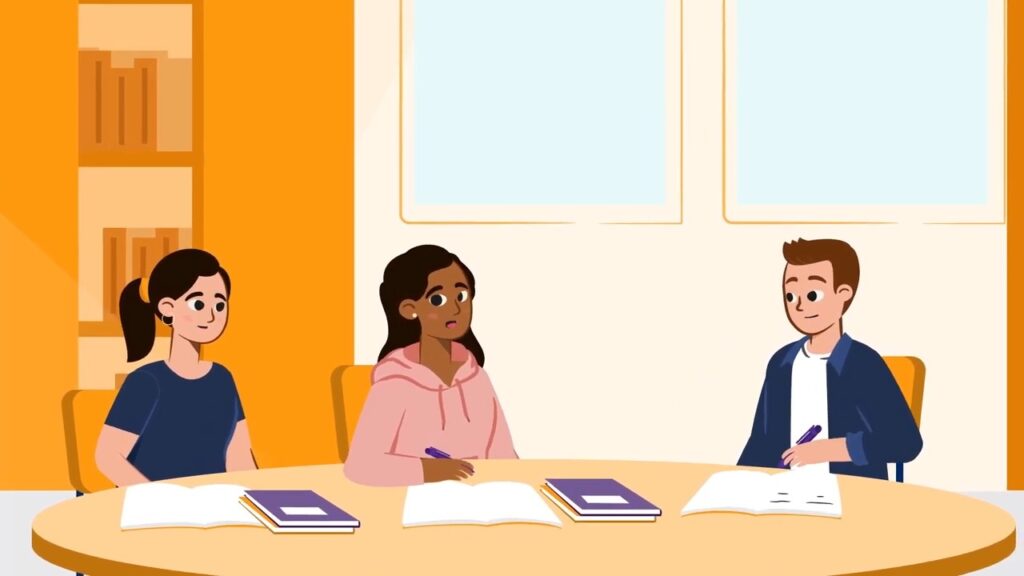
The case for animation in education marketing is not primarily aesthetic. It is functional. Animation gives education teams the ability to communicate program value, learning outcomes, and institutional culture in ways that neither written content nor live action video consistently achieves.
Complex program structures, for instance, are genuinely difficult to communicate in text. A postgraduate program with multiple specialisations, flexible entry pathways, and industry partnerships involves information that becomes dense and off-putting in written form. An animated explainer that walks a prospective student through those options visually, with clear narration and a logical flow, converts information that might otherwise cause a prospective student to close the tab into something they can follow and engage with. Comprehension increases. And with comprehension comes the confidence to take the next step toward enrolment.
Animation also removes the authenticity risks that live action video sometimes introduces. Student testimonial videos are a staple of education marketing, but they vary enormously in production quality, on-camera comfort, and genuine persuasiveness. A well-produced animated video with a clear narrative and strong visual design is more consistently compelling than a poorly lit testimonial shot on a smartphone, and it does not depend on finding students who are natural on camera.
Reaching Diverse Prospective Student Audiences
Education institutions in Australia serve some of the most culturally diverse student populations in the world. For marketing teams producing enrolment content, this means that content designed for a monolingual, culturally homogeneous audience will miss a significant portion of the prospective students the institution most wants to reach.
Animation is particularly well-suited to multicultural audience engagement. Animated characters and environments can be designed to reflect cultural diversity authentically without the casting complexity of live action production. Subtitles and translated narration can be added to animated content more cost-effectively than re-shooting live action video. And the visual clarity of well-designed animation reduces language barriers in a way that text-heavy content cannot.
For institutions with significant international student cohorts or strong enrolment goals in specific cultural communities, this is a practical and meaningful advantage. An animated program overview video that is available in simplified Chinese, Vietnamese, Hindi, or Arabic opens enrolment communications to prospective students who might otherwise disengage at the language barrier.
Animation Across the Enrolment Journey
The most effective use of animation in education marketing is not a single flagship video. It is a considered library of animated content that supports prospective students at different stages of the enrolment journey, from initial awareness through to application and acceptance.
At the awareness stage, short animated social media videos that communicate a program’s unique value proposition in fifteen to thirty seconds can drive traffic to institutional landing pages and generate top-of-funnel interest with audiences who would not engage with longer content. At the consideration stage, more detailed animated explainers that walk prospective students through program structure, outcomes, and pathways support deeper engagement and build the confidence to apply. At the conversion stage, process walkthrough animations that demystify the application process reduce drop-off rates and increase completed applications.
Each of these is a distinct piece of content with a distinct audience, a distinct purpose, and a distinct measure of success. Treating them as a coherent system, rather than a series of individual production jobs, produces significantly better enrolment outcomes.
Getting Internal Stakeholders Aligned Around Visual Content
One of the less discussed challenges for education marketing managers is the internal approval complexity that surrounds enrolment communications. Academic departments, faculty leadership, student experience teams, and executive management all have legitimate perspectives on how the institution should be represented, and those perspectives do not always align. The result is often content that has been reviewed and revised by too many stakeholders with competing priorities, and ends up being too cautious, too generic, or too long to do its job effectively.
Animation can actually help with this. Because animated content is built from a script and a visual brief rather than footage of real people and places, stakeholders can review and respond to the creative direction at a stage when changes are still relatively straightforward. The iterative nature of animation production, where characters, environments, and visual style are developed in stages before final production, gives approval stakeholders meaningful input without the costly re-shoots that live action revision sometimes requires.
For marketing managers navigating complex internal governance in higher education institutions, this is a practical advantage. A well-structured animation production process with clear review stages gives stakeholders the visibility they need while keeping the project moving forward on a manageable timeline.
What a Strong Brief Looks Like for Education Animation
The quality of an animated video for education marketing is substantially determined by the quality of the brief. A strong brief for an education animation project answers five questions clearly: What is the single most important thing this video needs to communicate? Who specifically is watching it, and what do they already know? What do you want them to feel or do after watching? What does success look like for this piece, and how will you measure it? And what must not appear in this video, whether that is specific competitor references, outdated program information, or visual representations that are inconsistent with brand standards.
A concept testing process before full production is also worth considering for significant enrolment campaign investments. Testing animated concept directions with a small group of prospective students before committing to full production reduces the risk of investing in a creative direction that does not land with the intended audience, and gives the marketing team evidence-based confidence in the approach they are taking.
Standing Out in a Crowded Enrolment Market
Education marketing teams that invest in high-quality animated content are making a deliberate bet that visual clarity, emotional resonance, and accessibility will outperform volume and familiarity in a crowded enrolment market. The evidence, both from industry and from the direct experience of institutions that have made this investment, supports that bet.
Animated content that is genuinely well-designed, clearly briefed, and strategically distributed does not just perform better in isolation. It raises the overall quality signal of the institution’s communications, reinforcing brand credibility and building the kind of trust that eventually converts into enrolment decisions.
If your education marketing team is ready to think seriously about animation as an enrolment strategy, the Punchy Studio team is here to work through it with you. Get in touch to start the conversation, or explore our portfolio to see the visual communications work we have produced for education and community organisations across Australia.