Most government communication to young people sounds like government communication.
Authoritative. Comprehensive. Written by adults who report to other adults.
The Victorian Department of Education came to us with a problem that needed a different approach. They needed to reach prospective international students aged 12 to 18, mostly from China, Vietnam and India, many with limited English.
The students were nervous. Their parents were nervous. And the existing pre-departure information, while accurate, was not landing.
The decision that shaped the series came back to something we say a lot at Punchy. Show, don’t tell.
The Challenge
A 14-year-old in Hanoi or Chengdu about to move to Melbourne isn’t worried about policy frameworks. They’re worried about what time they’ll wake up. Who they’ll eat with. Whether they’ll be alone at lunch.
The Department had the answers. But answers delivered by an institutional voice tend to land as instructions, not reassurance. And for an audience whose biggest concern is emotional rather than informational, instructions miss the point.
There was a secondary audience too: parents and guardians, often the actual decision-makers, often less proficient in English than their children. The content had to reassure two generations at once.
The Strategy
We made three animations, each narrated by a different voice depending on what the moment required. Video one is narrated by a student. Videos two and three are voiced by a homestay parent.
A 14-year-old won’t be reassured by an institutional voice telling them they’ll be fine. They’ll be reassured by hearing a peer describe a normal Tuesday, then hearing the adult they’ll actually live with explain how this works.
The Approach
Video 1: What to Expect When Arriving in Victoria
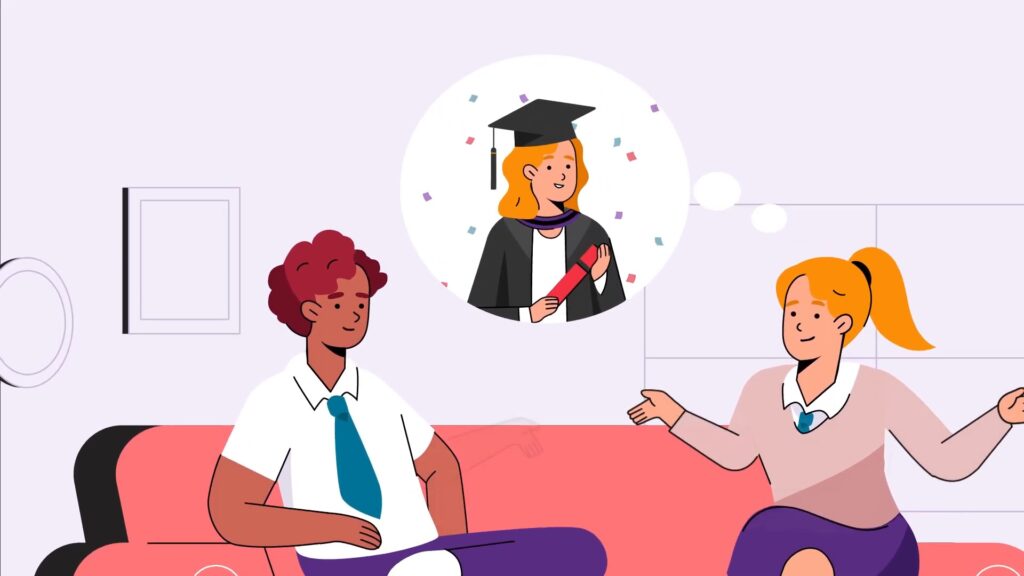
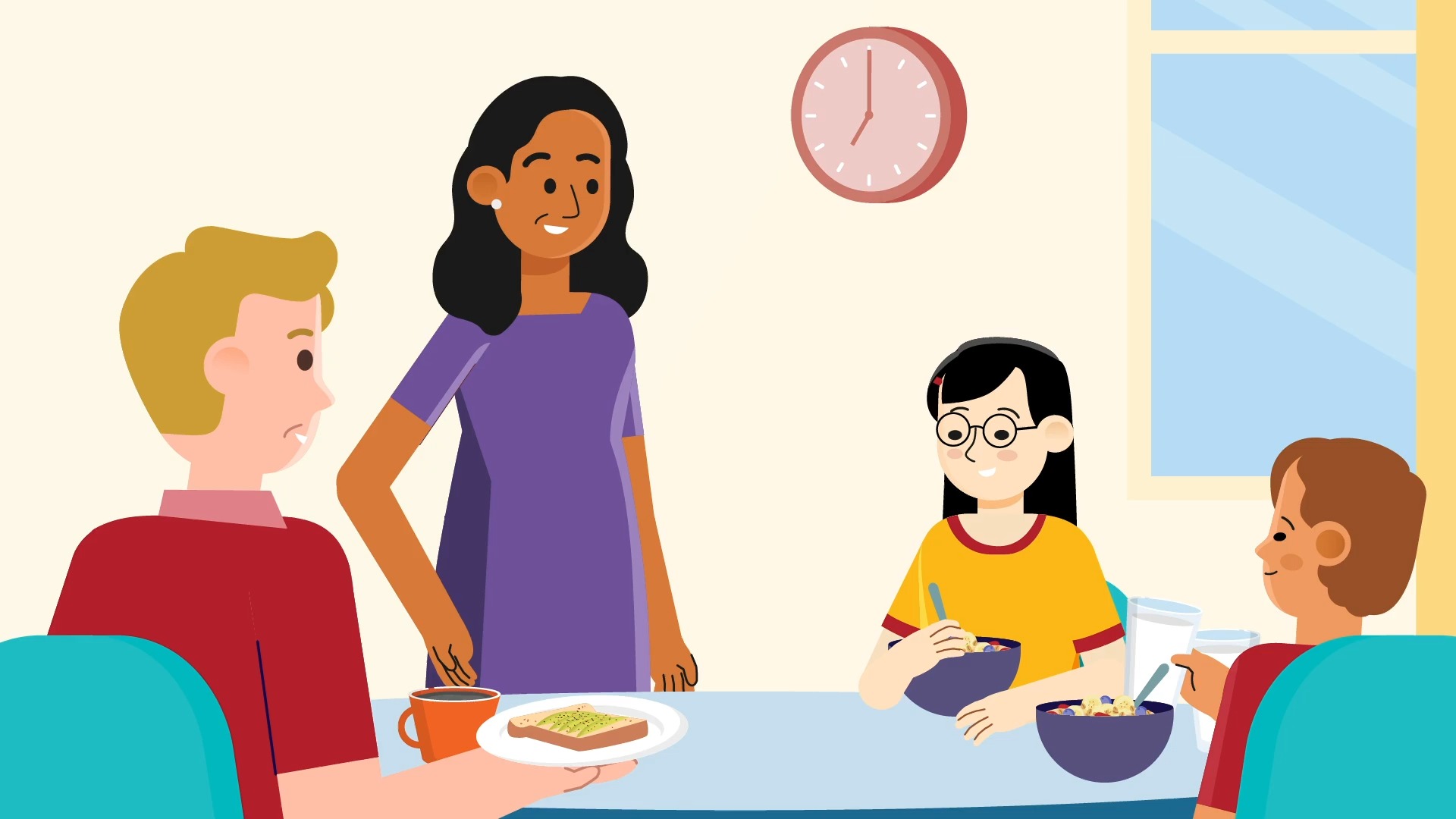
Narrated by a student, structured as a single day.The script never sells the school system. It just shows what a normal day looks like, which is the only thing a nervous teenager actually needs to see.
Video 2: Overcoming Homesickness
Narrated by a homestay parent. This is the person the student will live with on arrival. Hearing her acknowledge that homesickness is normal, then offer practical things to try (extracurriculars, video calls home, talking to the student coordinator) lands as care rather than instruction.
Video 3: Staying Safe
Safety content (scams, road rules, public transport, swimming, emergency numbers) is the hardest of the three to deliver without sounding like a warning. We portrayed it in a way where it’s not a list of dangers. It’s an adult who cares about you walking you through what to watch for.
Translations into Simplified Chinese, Vietnamese and Hindi were produced with our multicultural partners Ethnolink, ensuring the cultural and linguistic adaptations worked for families across the three priority markets.
The Outcome
The Department now has a content suite that speaks at the eye level of the student, not down to them. Each video is short enough to watch on a phone, specific enough to be useful, and human enough to be trusted.
If you’re writing for an audience that’s young, nervous, or skeptical of official messaging, choose your narrator before you choose your script. The voice changes what the words mean.
Next Steps
Got an audience that won’t be reached by an institutional voice?
Whether you’re working with young people, multilingual communities, or anyone who has reason to tune out official messaging, we’d love to help you figure out who should be speaking and how.
Drop us a line and let’s chat about what you’re working on.