Over five million layer hens in Australia remain confined to barren battery cages, yet most Australians believe this practice has already ended.
For RSPCA Australia, the challenge wasn’t just raising awareness. It was correcting widespread misinformation and getting people to act on a problem they thought was already being solved.
The Challenge
77% of Australians support phasing out battery cages, yet this overwhelming public support wasn’t translating into action.
Cage-free eggs had become more visible in supermarkets, creating a false sense that the issue was resolving itself.
Media coverage about a planned 2036 phase-out further muddied the waters, leading people to believe the problem would solve itself without their involvement.
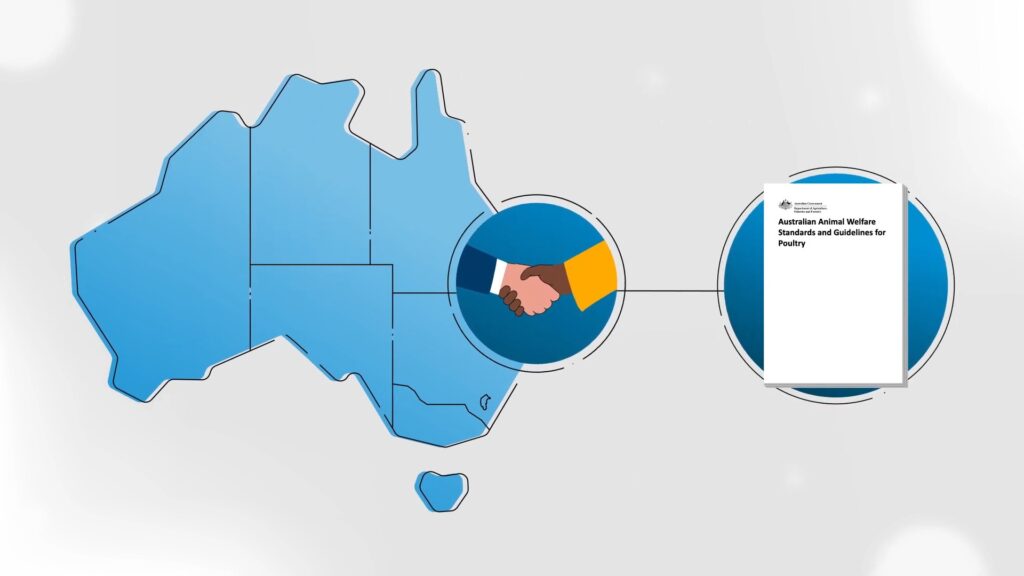
But the reality was stark: without state and territory governments actually legislating the phase-out, those 5 million hens would remain in cages indefinitely.
RSPCA Australia needed to deliver two critical messages.
First, battery cages remain one of Australia’s worst animal welfare issues.
Second, that after nearly 70 years of advocacy, the finish line was in sight, but only if people took action now.
The Strategy
We needed to distill complex policy timelines and farming systems into content that was immediately understandable and impossible to dismiss.
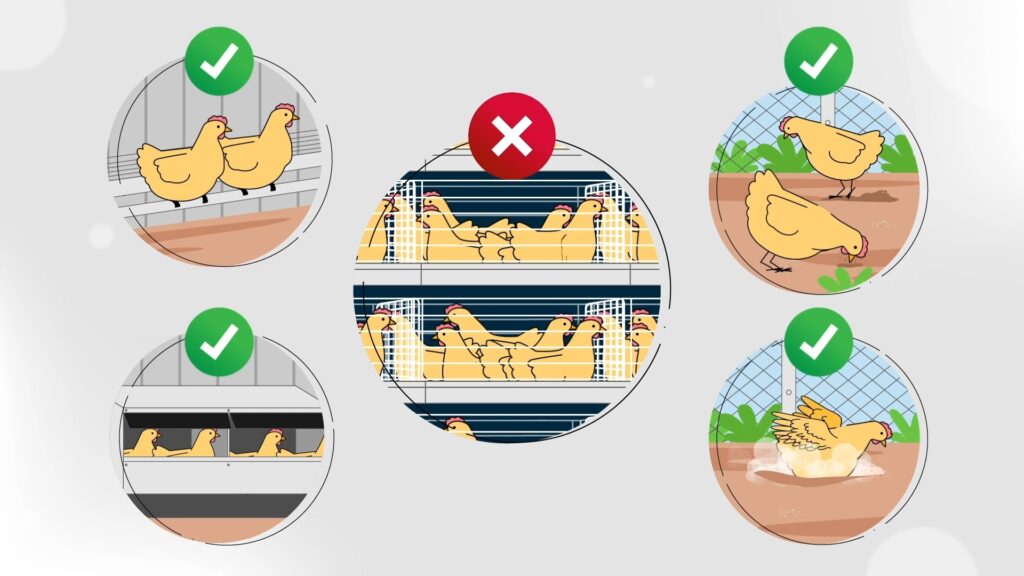
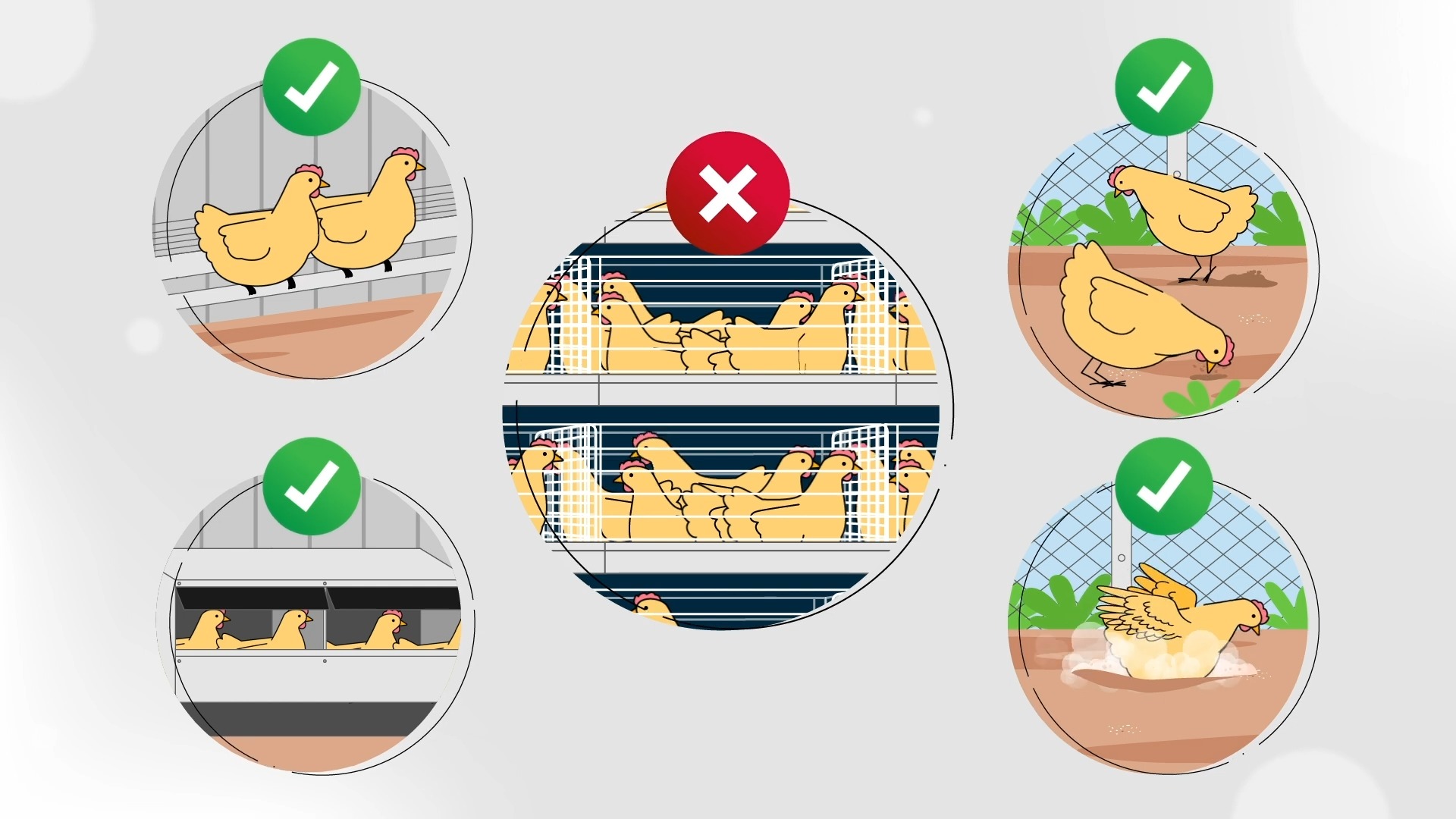
Animation allowed us to represent the conditions accurately while keeping the focus on information rather than shock value.
No filming facilities, no legal complexities, just clear visual storytelling.
The strategy was built around two complementary 60-second videos.
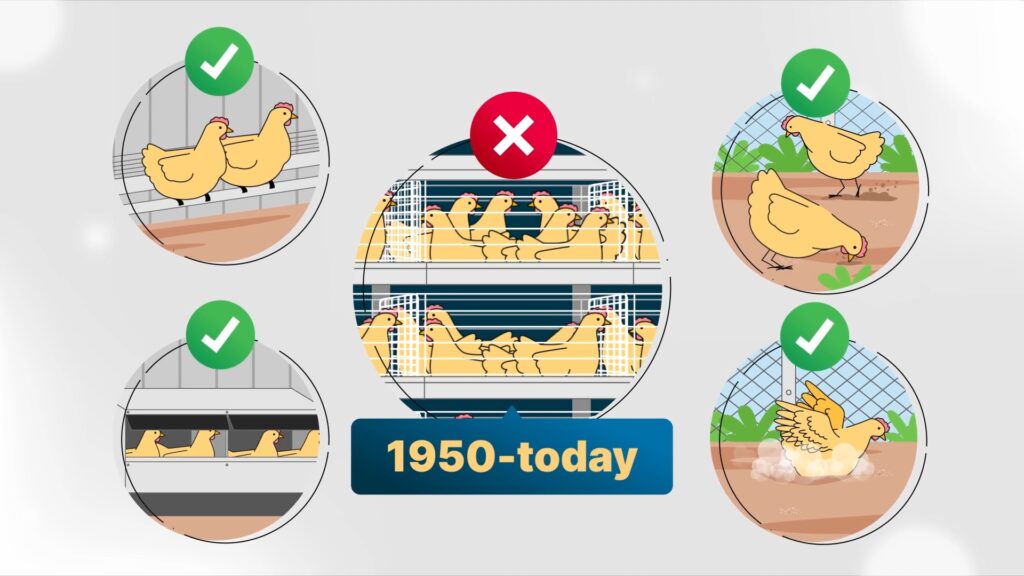
The first would establish the problem: what battery cages are, why they’re harmful, and how many hens are affected.
The second would provide context: the decades-long journey to reach this moment and what would happen without immediate government action.
Statistics and timelines would be presented as memorable visual moments that stuck with viewers long after they’d scrolled past.
The Approach
The key was making numbers stick. When the script said each hen has less space than a piece of A4 paper, we showed exactly that.
When we mentioned 167,000 Australians submitted feedback calling for change, we visualised that scale so it became more than just another number.
Video one established the basics. It showed the reality of 16 million layer hens in Australia, explained what battery cages actually are, and detailed the physical and behavioural restrictions hens face. This gave viewers the foundation they needed to understand why this matters.
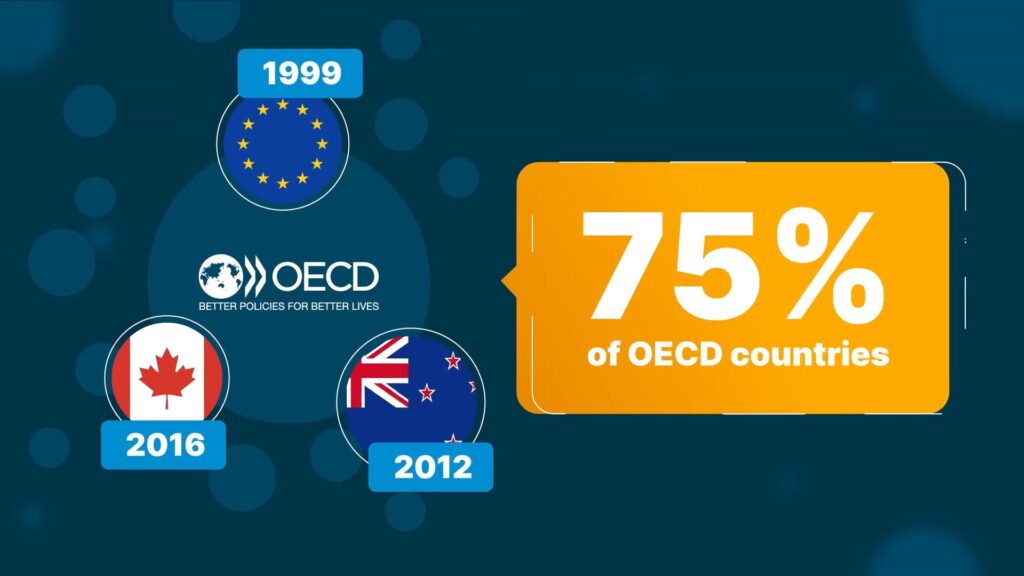
Video two provided the context: why is this still happening after 70 years? We traced the journey from the 1950s through decades of expert recommendations and international phase-outs, landing on today’s critical moment where government action could finally end the practice.
Both videos steered clear of targeting specific states since the political landscape keeps shifting. Instead, we directed people to byebyebatterycages.com.au where RSPCA could adapt calls to action as campaigns evolved across different states.
The Outcome
The videos gave RSPCA Australia a powerful tool to combat misinformation and create urgency around an issue many believed was already resolved.
By clearly explaining both the problem and the pathway to change, the content equipped supporters with the knowledge they needed to advocate effectively.
The flexible call to action meant the videos could continue working across different campaign phases and states.
Most importantly, the videos reframed battery cages from a problem being solved to one that urgently required public pressure.

Next Steps
Got a complex issue that needs explaining?
Whether you’re navigating confusing policy timelines, combating misinformation, or mobilising supporters experiencing compassion fatigue, we’d love to help you figure it out.
Drop us a line and let’s chat about what you’re working on!